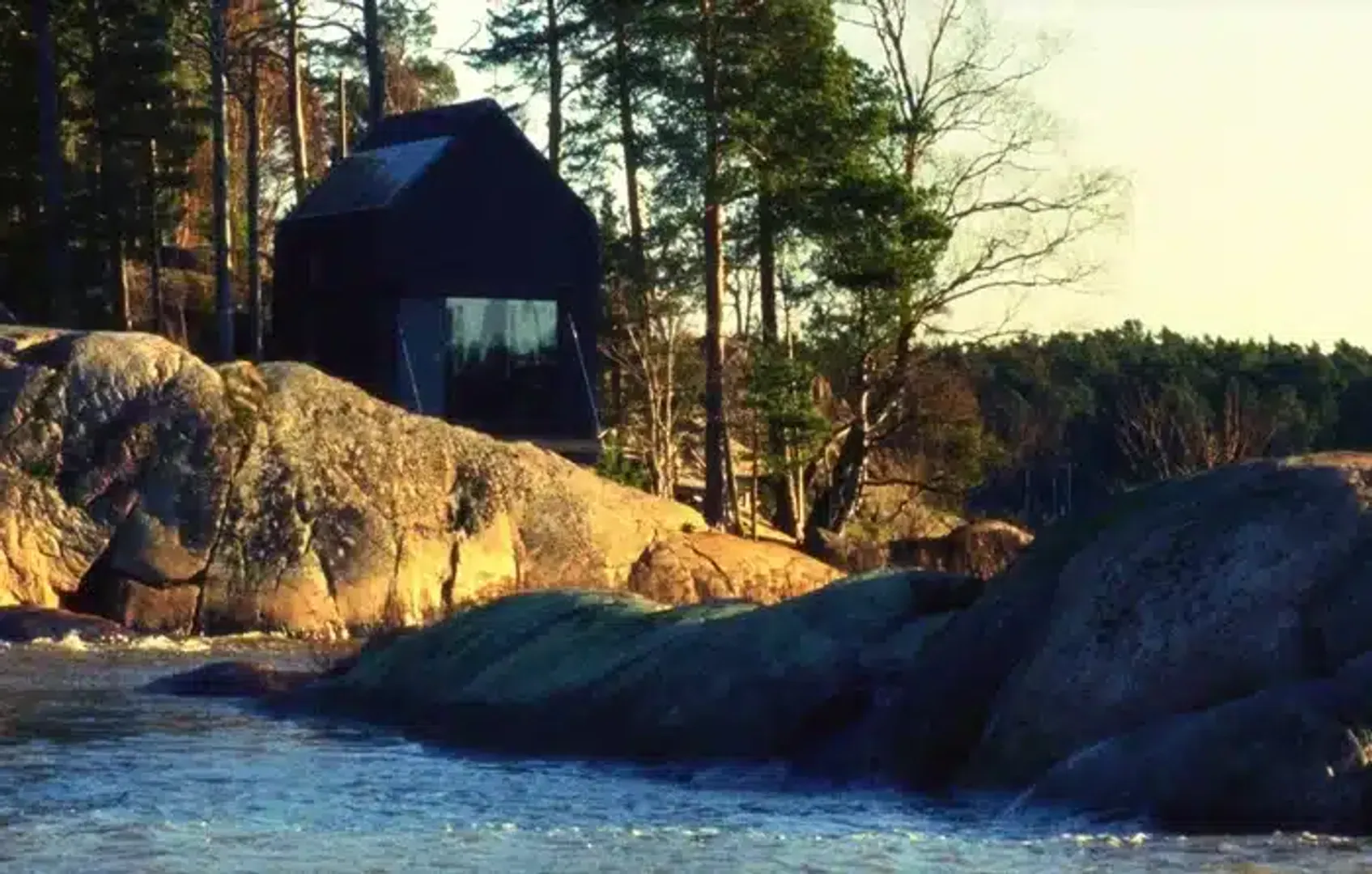
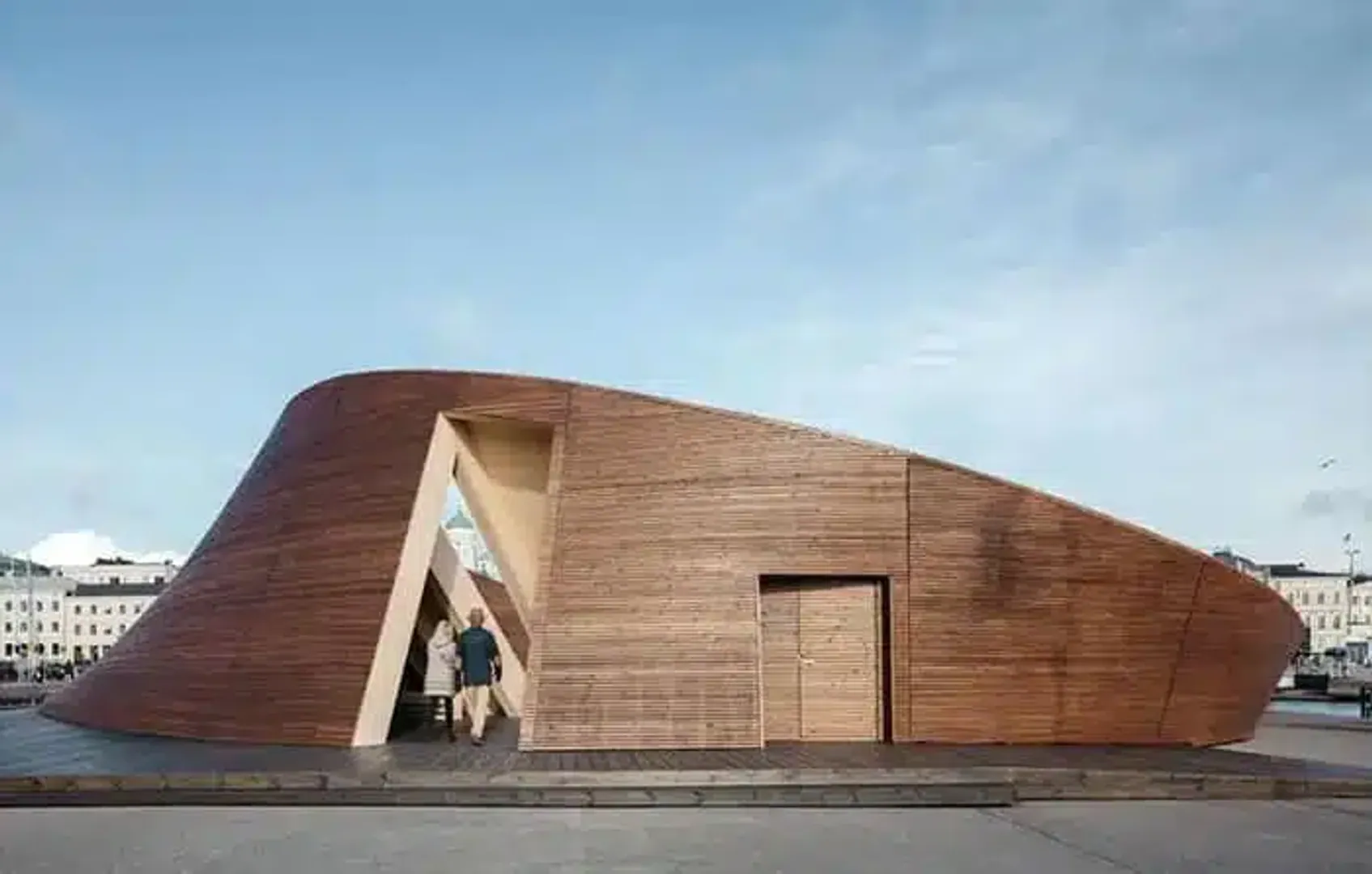
While many know of the beauty of Helsinki’s surrounding archipelago, few are aware of this unique way to experience it. Majamaja Helsinki Experience offers visitors the chance to enjoy an off-grid living experience just outside the city. Launched in 2019 by Finnish architect Pekka Littow, Majamaja is based around premium architecture and resource-optimised wooden buildings, combined with patented off-grid technology for green energy production and water purification. Stay there, and you’ll wake up to the peaceful sounds of seabirds, the rise of the pulsating sea and a gently whispering breeze. At night, Majamaja offers the perfect mix of coastal nature, peace and quiet and harmonious design.
Visit the Paavola oak tree in Lohja
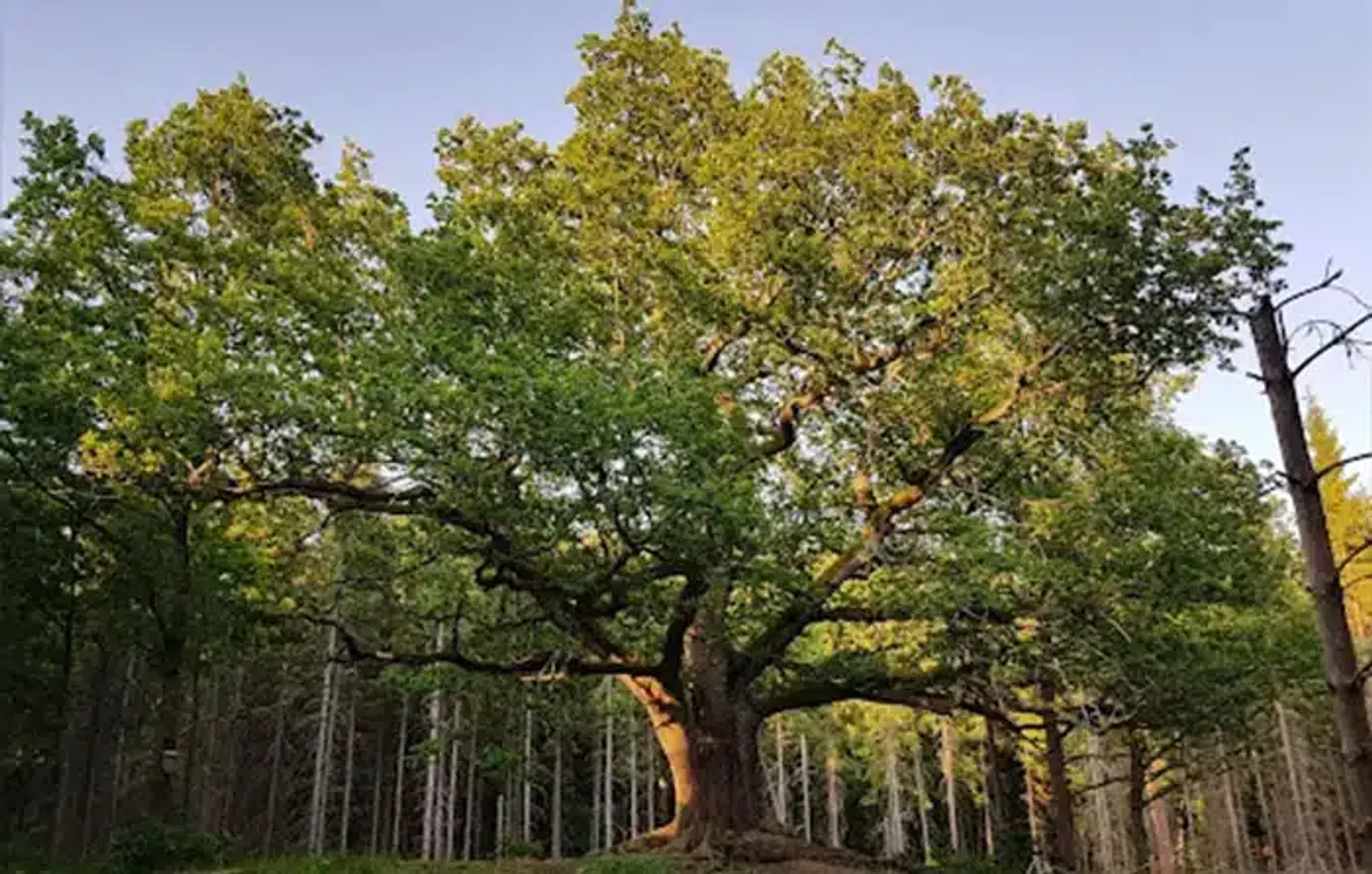
Located just 60 km from Helsinki, Lohja boasts a quaint vintage, lovely cafés and a slower pace of life surrounded by Finland’s natural beauty. Nature trails near town offer 15 checkpoints with plenty of information on the surrounding scenery and breathtaking woods full of oak, lime, and hazel trees. You’ll also encounter a massive oak tree, Paavolan Tammi, which has a circumference of 668 cm and stands approximately 12 metres high. The tree is protected by the Nature Conservation Act, and it’s quite an impressive sight! Please remember to stay on the marked paths to protect this old tree giant.
Escape to your very own island retreat on Sisä-Hattu
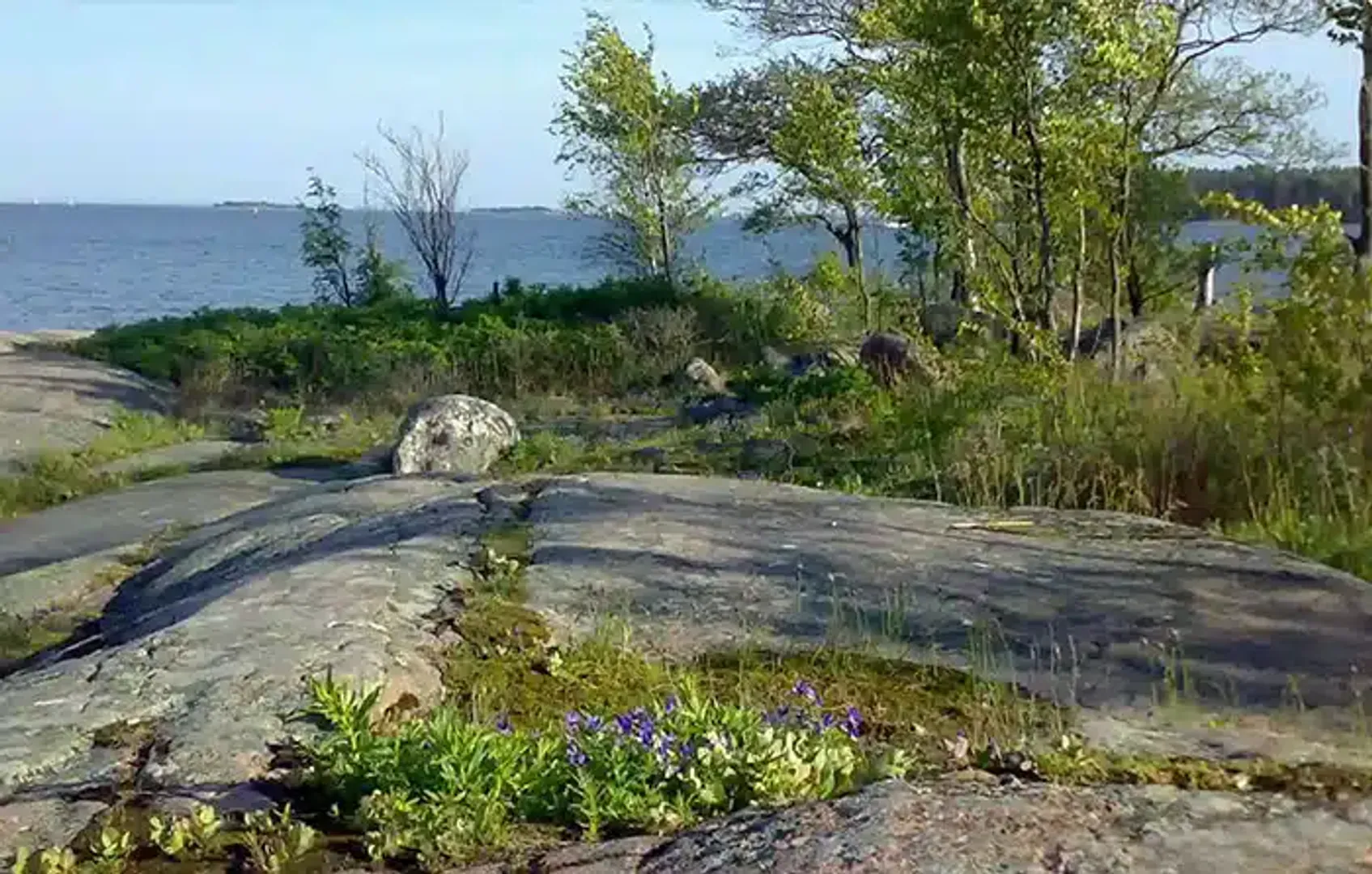
If you want to be alone and take in unique views over Helsinki, this tiny island off the coast of Lauttasaari is usually deserted and unexpectedly serene. With no bridges or ferries to the island, only go if you’re prepared to get your feet wet. You’ll need to wade through shallow water at low tide to get there, but it’s worth the effort. Watch boats sail by to the mainland, spot centuries-old rock carvings made by sailors and enjoy a picnic to the sound of lapping waves, knowing you have a little corner of Helsinki all to yourself.
Nuuksio National Park
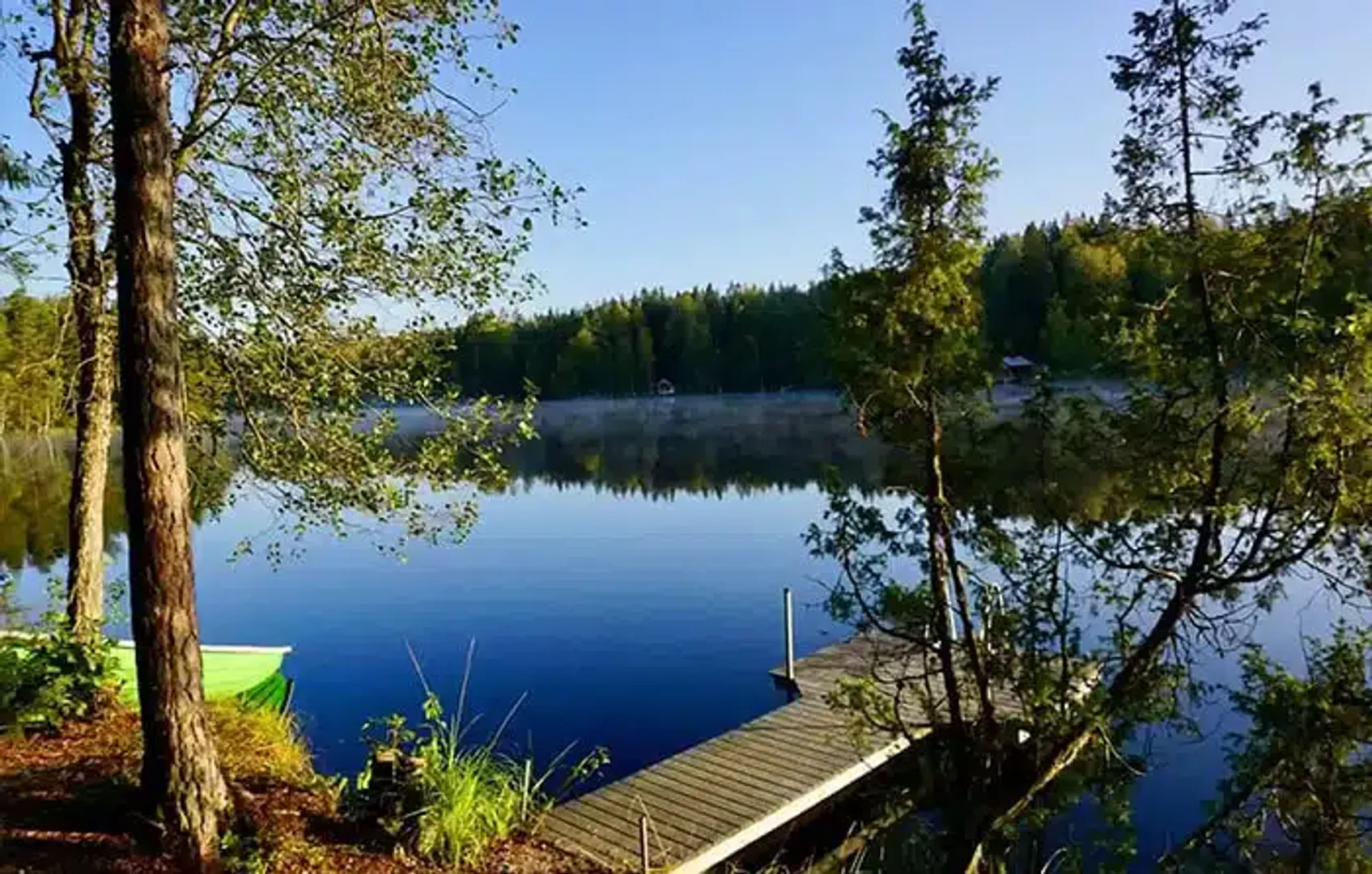
Wild Woods and Lakes on Helsinki’s Doorstep. Within easy reach of the Finnish capital you can escape into wild natural settings and enjoy typically Finnish scenery, with lovely lakes, green forests and rugged crags. Pack your backpack for a memorable family picnic or campout. The nearby Finnish Nature Centre Haltia spotlights the best of Finland’s natural treasures from across the country. Arrive by car or public transportation. Suitable for the entire family and tourists. Wheelchair access to the Haukkalampi, Kattila and Haltia areas. Marked trails and nature trails vary from easy to difficult (1.5-17km), 30km of biking trails, 22km of horse riding trails. Nuuksio has numerous services all year round: campfire sites, cooking shelters, lean-to-shelters, camping sites, dry toilets, rental huts, conference and sauna facilities and a wide range of activities for people of all ages.
The Silent People
The crowd of almost thousand figures that make up the Silent People suddenly emerges before the passing motorist like some great stroke of magic. In the morning with light behind them, this motionless army appears morose, even menacing. However, as the day progresses their countenance brightens up and with the setting of the sun they present a distincly jolly and colourful picture. When the wind blows their straw hair and clothes begin to flap rhythmically, it is as if they had suddenly sprung into life.
Luostarinmäen Käsityöläismuseo
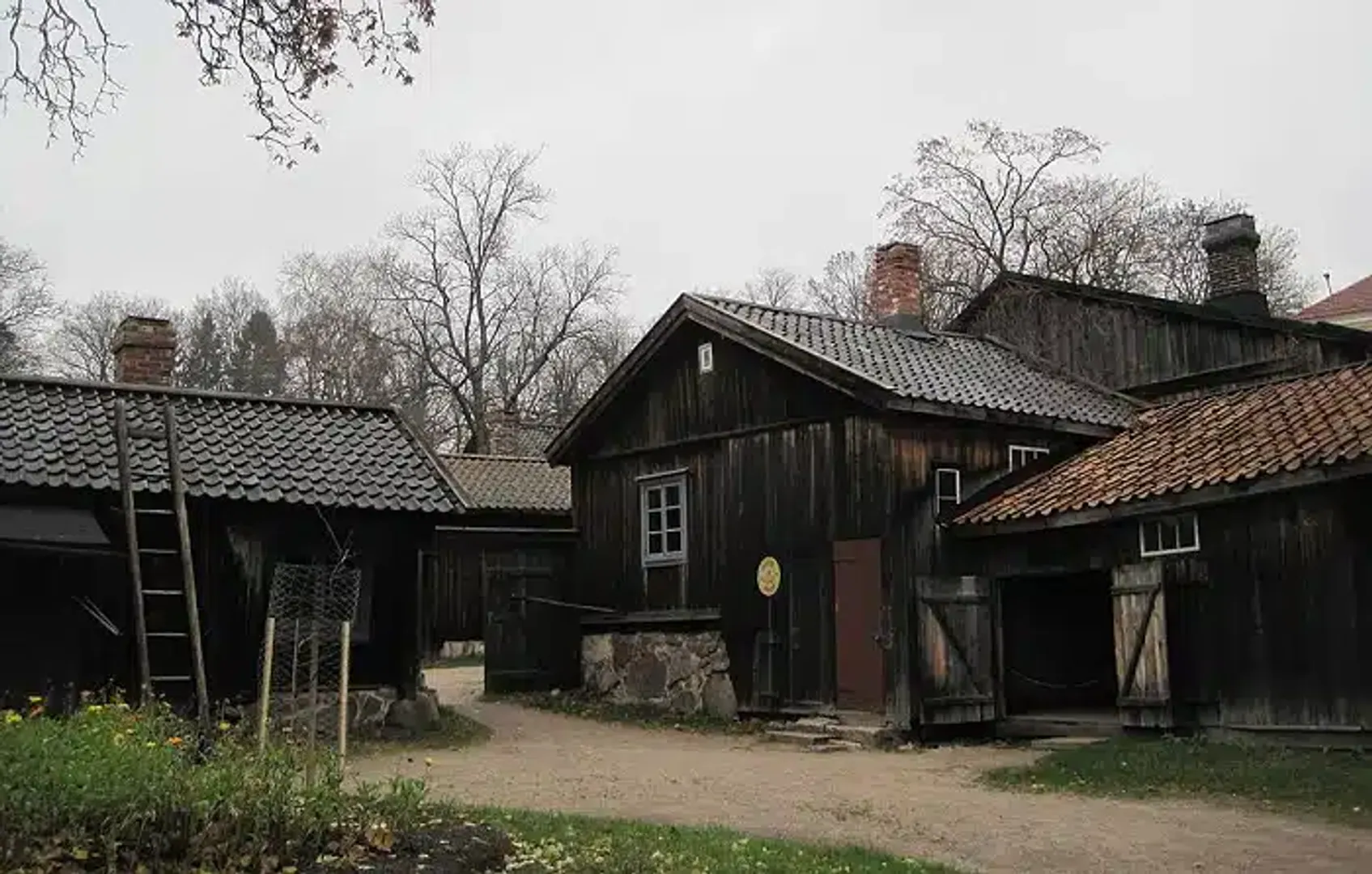
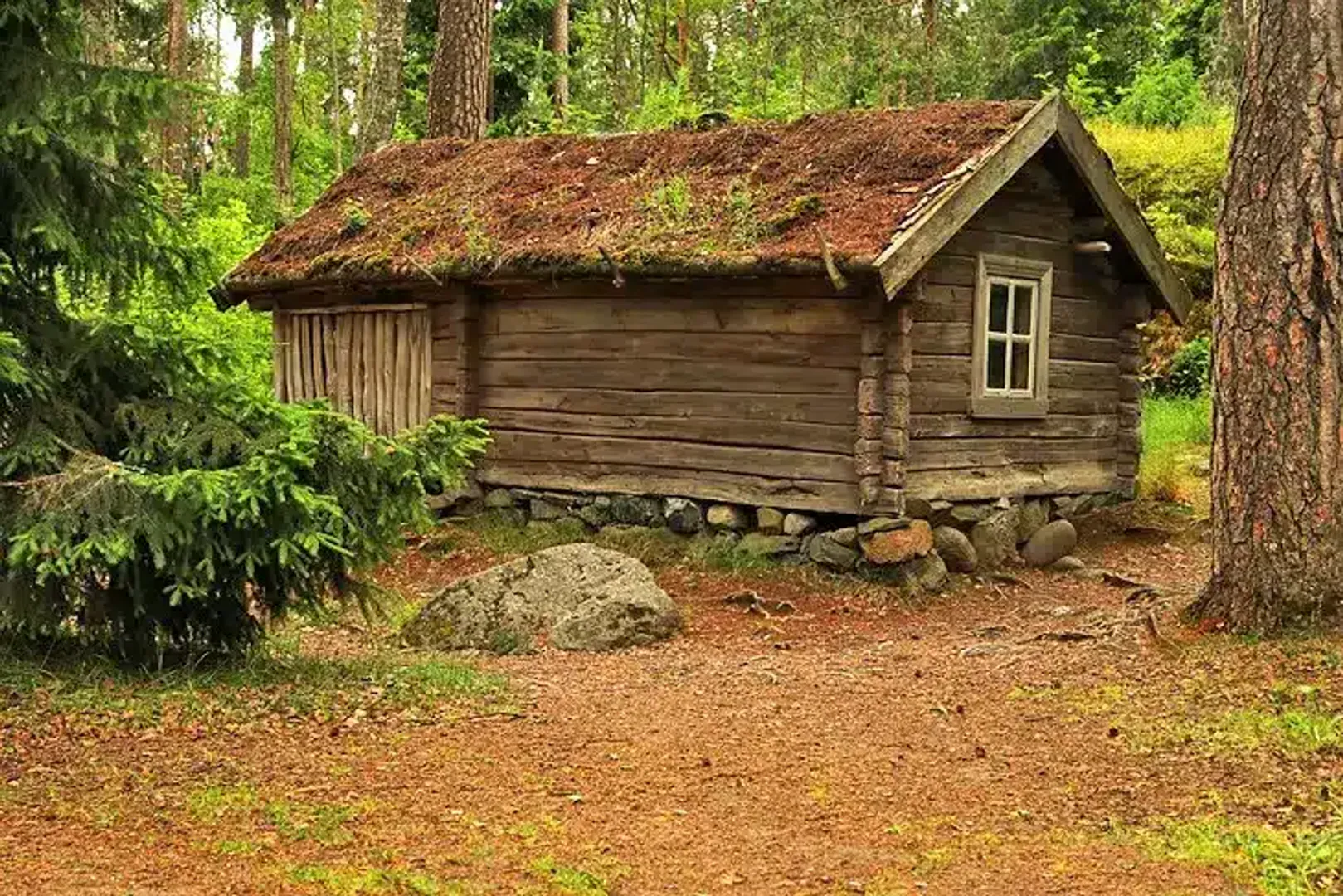
Luostarinmäki is the only continuous district of wooden houses that survived the fire of 1827 in Turku. These houses are over 200 years old and still standing in their original building sites. The houses have been furnished as craftsmen’s homes and workshops, representing over 30 different trades. The museum tells the story of pre-industrial urban craftsmanship. In the summertime craftsmen come to work in the workshops.
Lapland Hotels SnowVillage
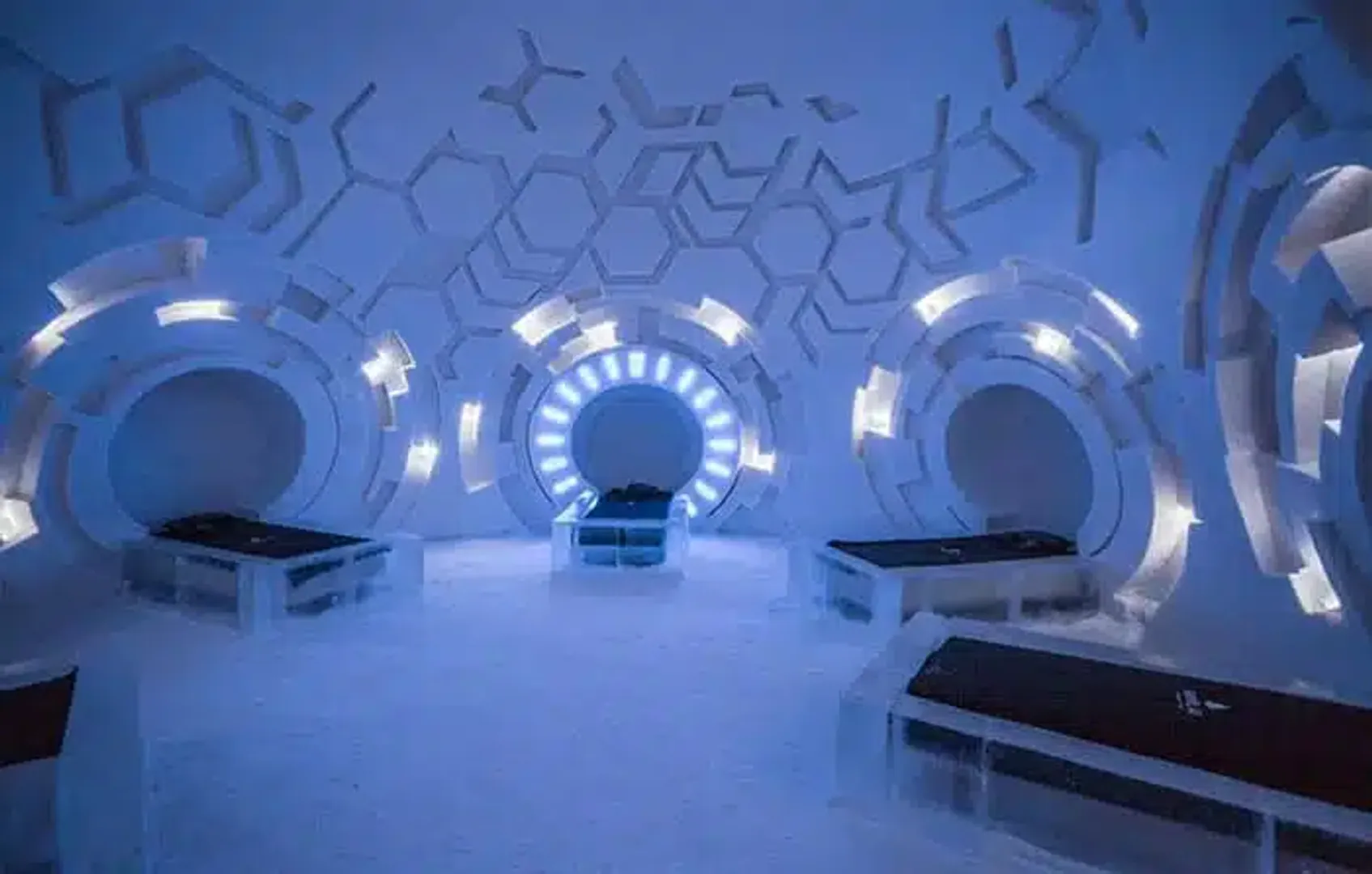
Have unique arctic adventures at Snow Village! Here you will see the breathtaking constructions made of snow and ice. If you are brave enough you may spend a night in the snow suite, have a dinner at the top class ala carte restaurant or enjoy a drink served in ice glass. Or you can just marvel at the magnificent sculpture art all around the area.It is located in Western part of Finnish Lapland, in close proximity of Ylläs and Levi ski-resorts and easily reachable from the international airport of Kittilä. You are very welcome to come around and have an experience of life time!
Vanha Kauppahalli
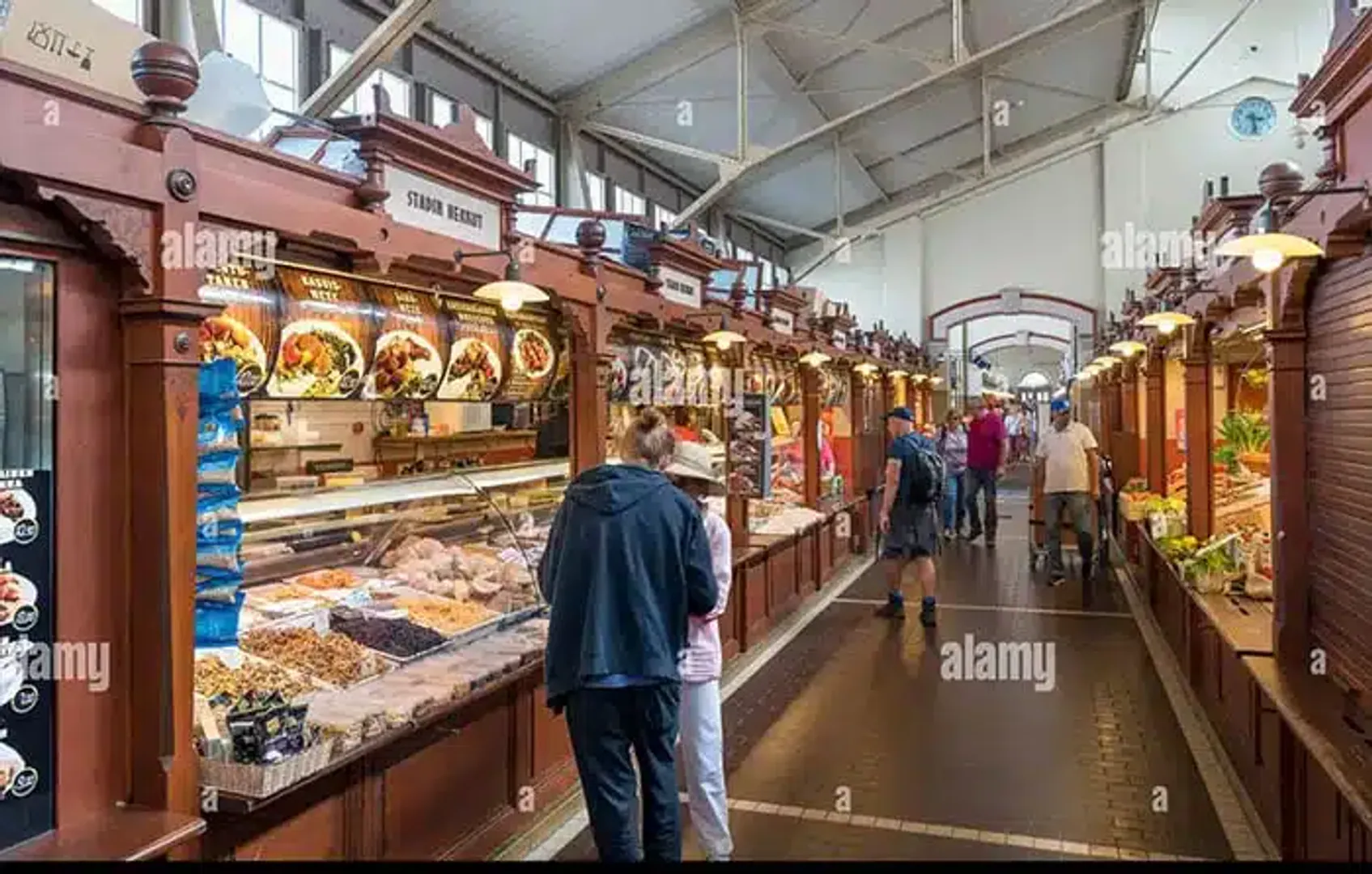
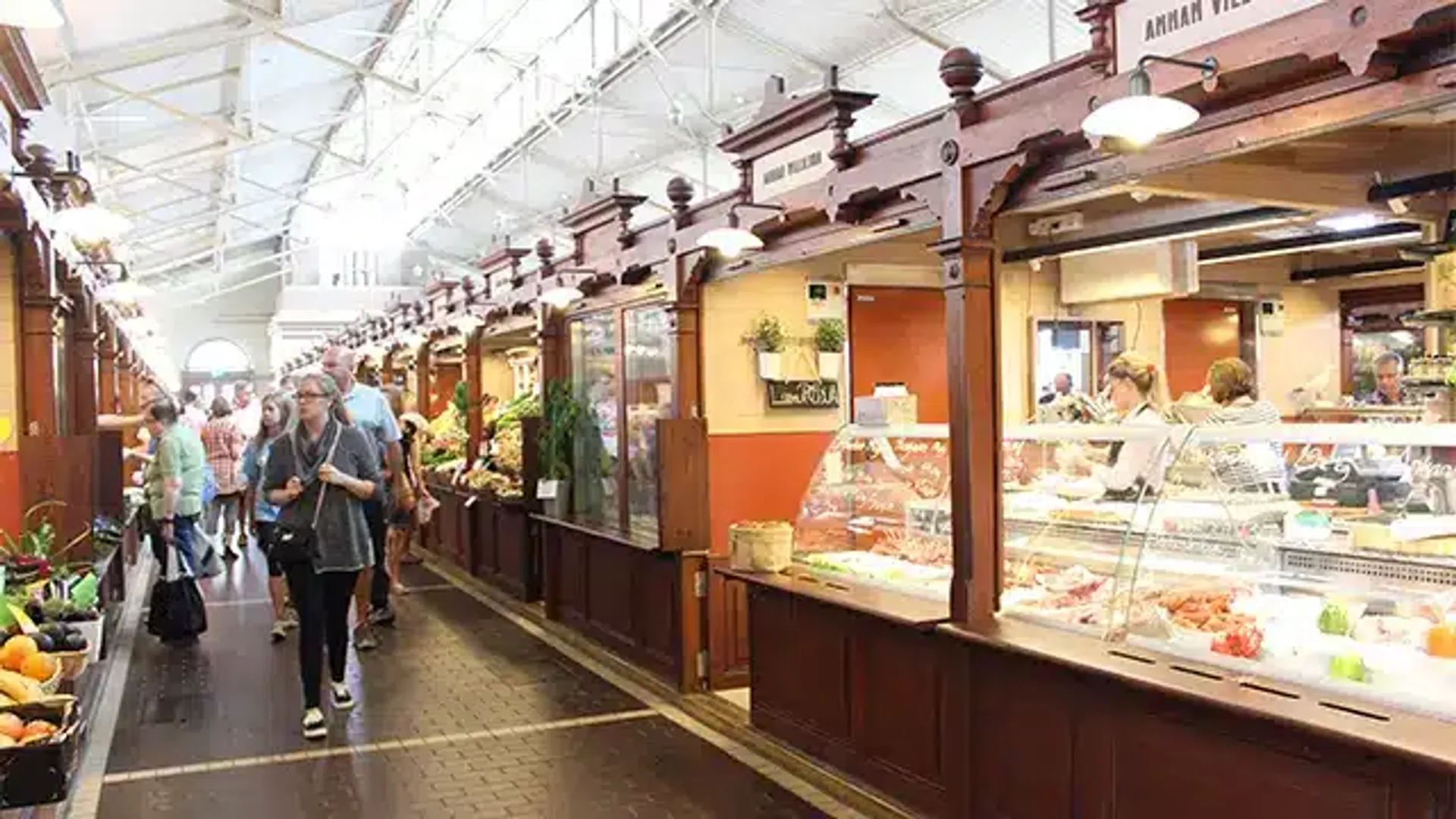
Vanha Kauppahalli is located next to Kauppatori, Market Square, which is the most popular outdoor market in Helsinki. Vanha Kauppahalli is located in a beautiful historic building. Visitors to the city will easily find a great selection of fresh local ingredients to cook with. Need a break from walking around and exploring? Then stop by for a coffee and cinnamon roll. The market is open every day.
Pukkisaari
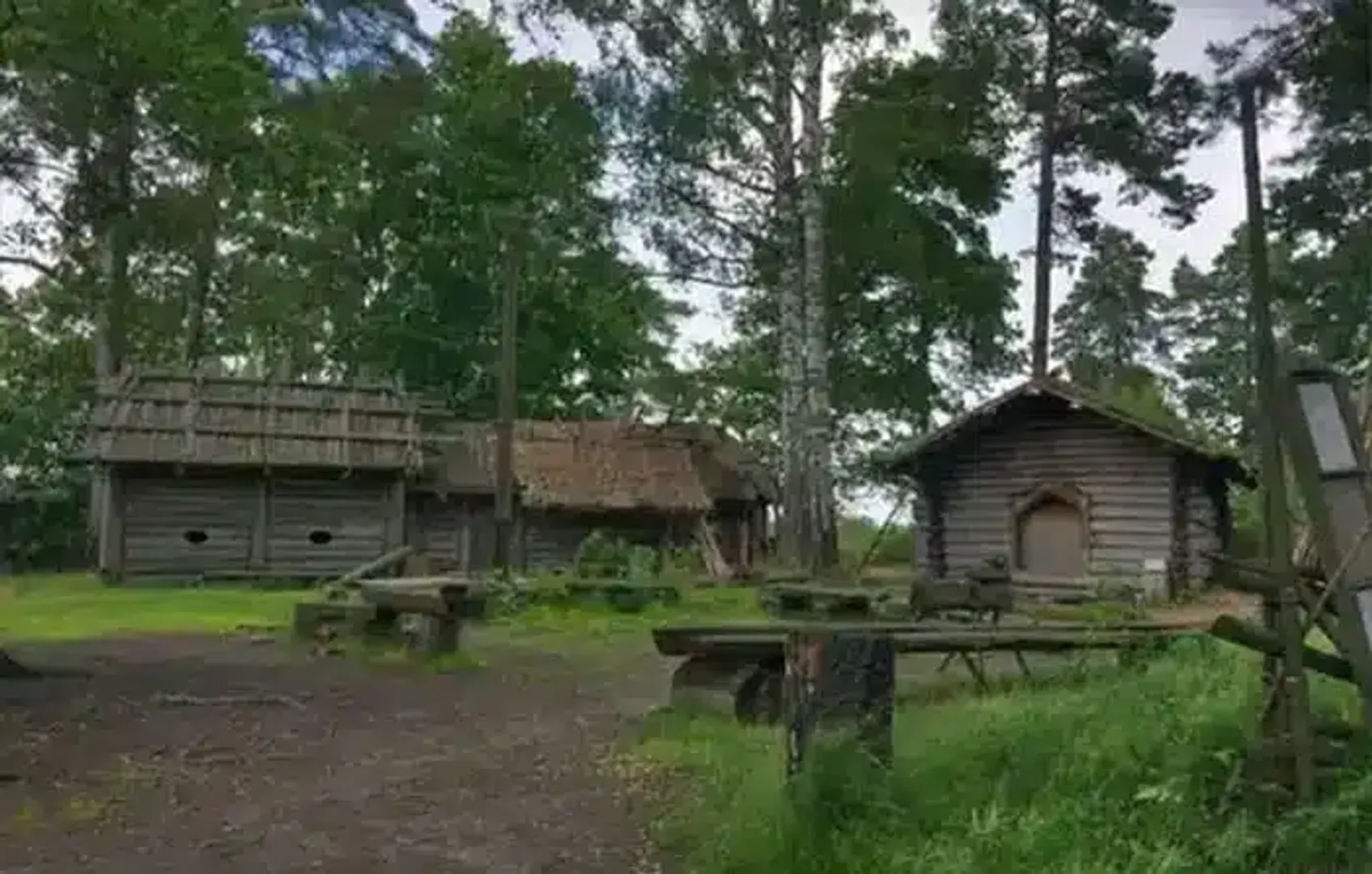
Though Very Few Wooden Structures from the Iron Age have survived in Finland, at this site you can see what a trading village from that time might have looked like. It is situated on Pukkisaari, a tiny island in Seurasaarenselkä Bay in Helsinki. The village was built in 1999 by Sommelo ry, a non-profit organization dedicated to the research of Finnish Iron Age history. It is a faithful reproduction of a typical trading settlement from the first millennia. The buildings on Pukkisaari are not restorations of specific buildings that once stood here, but rather representations of the construction techniques used in Finland and nearby areas at the end of the Iron Age. There is a large house with a central stove, a small cooking hut made out of thin spruce logs, a workshop, and more.
Cruise over to the Helsinki Biennial
The Helsinki Biennial is an international art fair that brings outstanding contemporary art to the Helsinki archipelago. While the next event isn’t happening until 2023, 2021’s open-air installations were a big hit with attendees. Time magazine even postulated that Finland, an oft-recognised environmental leader, could become an emerging hotspot for art as well. You can access the island of Vallisaari by ferry from several points on the mainland or by private boat. The JT-Line-operated ferry option from Hakaniemi even offers the chance to engage in a bit of island-hopping along the way, as the boat stops in Hakaniemi, Kruunuvuorenranta, Vasikkasaari, Vallisaari and Lonna during the summer months. Please note that people who use wheelchairs or rolling walkers might want to bring an assistant when traveling to Vallisaari. The next Helsinki Biennial takes place in 2023.
Take a Boat to the Fortress of Sveaborg & the Suomenlinna Islands
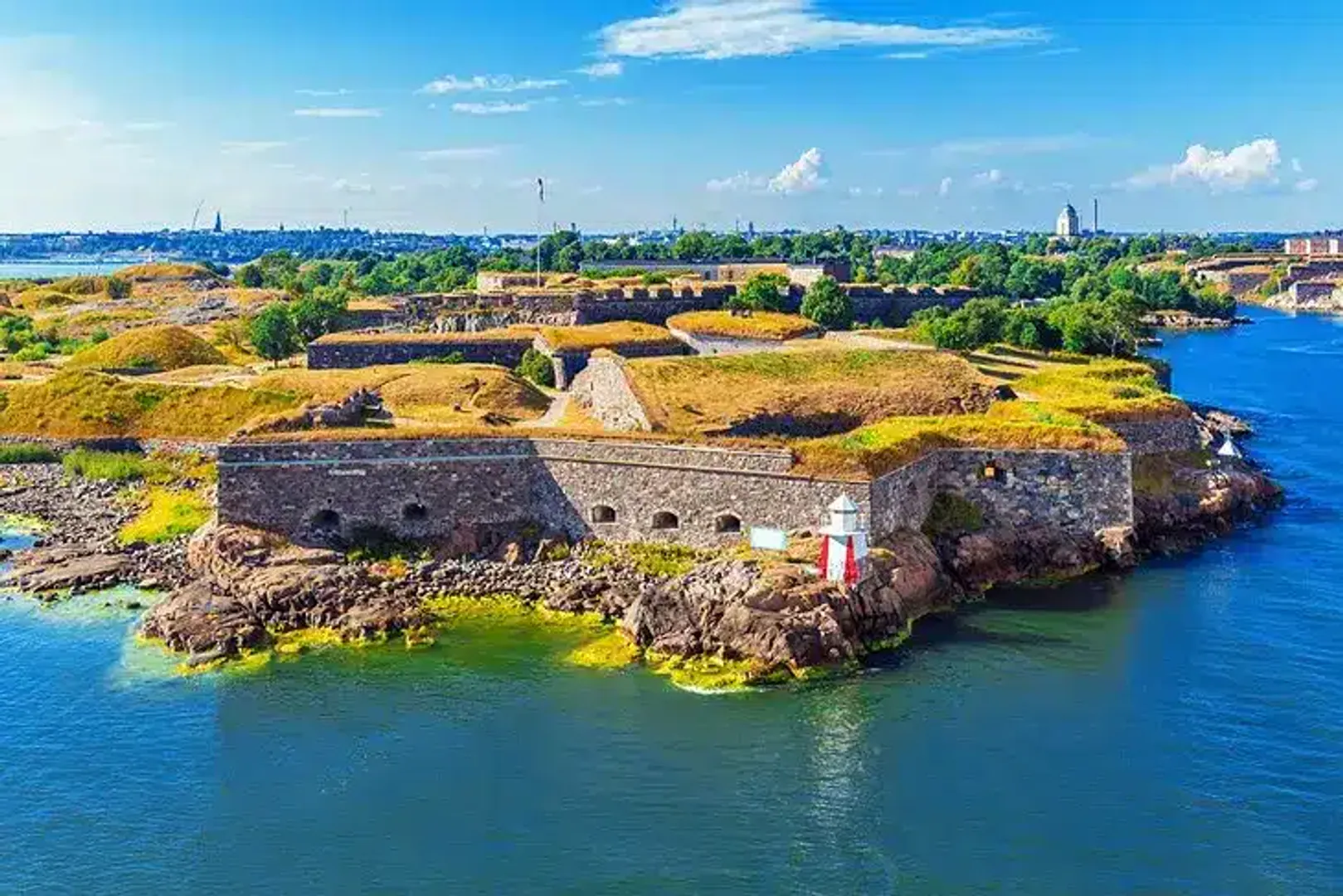
The fortified islands of Suomenlinna are an integral part of Helsinki. While they may at first seem remote, they are in fact easy to reach by a 20-minute ferry ride, using the same ticket as for buses and trams. The fortress of Sveaborg itself – which, literally translates as “Swedish Castle” – dominates the island. It was built in the mid-18th century to bar Russian access to the Baltic. During the Swedish-Russian war of 1808-09, it fell to the Russians, who thereafter enlarged and strengthened it. In 1918, it passed into Finnish hands and was given the Finnish name of Suomenlinna (Finnish Castle). During the 1950s and 1960s, it was handed over by the military to the civilian authorities, and since then has been restored and converted for cultural and recreational use. It is now included in UNESCO’s list of world heritage monuments and is a museum, a park, and an arts venue. The area is open most of the year but hours and ferry access vary, so be sure to visit the website for the latest information.
Shop in Helsinki’s Market Square
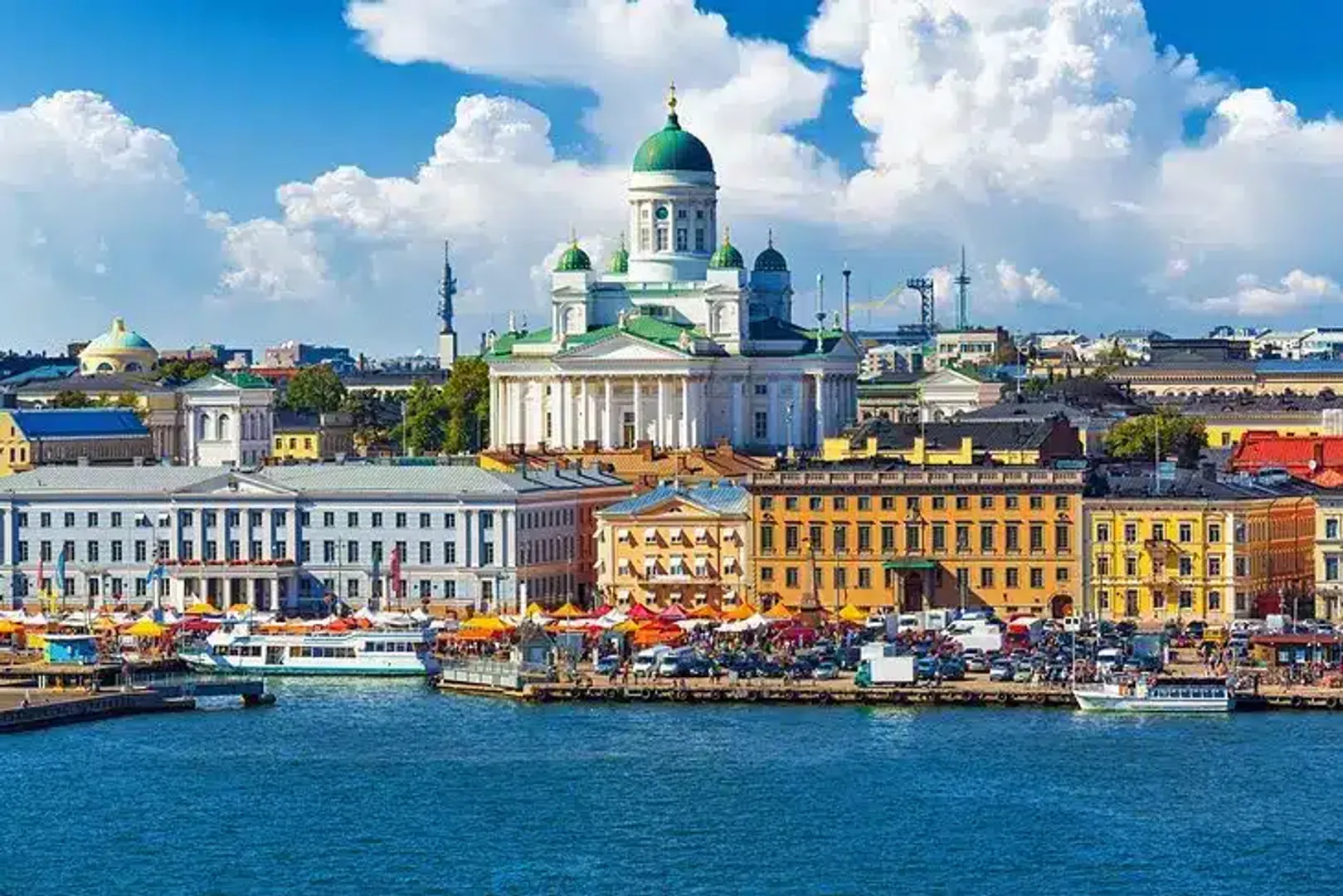
The Market Square (Kauppatori) is the main planned and paved square in central Helsinki, and is one of the best-known outdoor markets in northern Europe. Bordering the Baltic Sea at the eastern end of the Esplanadi, it is full of stands selling Finnish foods, flowers, and tourist souvenirs. There are often even fishing boats lined up in the water selling seafood directly from the boat. In the winter, market stalls are protected under tents, and there is a year-round market hall with more vendors. Visitors should watch their food carefully, however, as the seagulls at the market are large and brazen and will pluck food from unsuspecting diners.
Temppeliaukio Rock Church
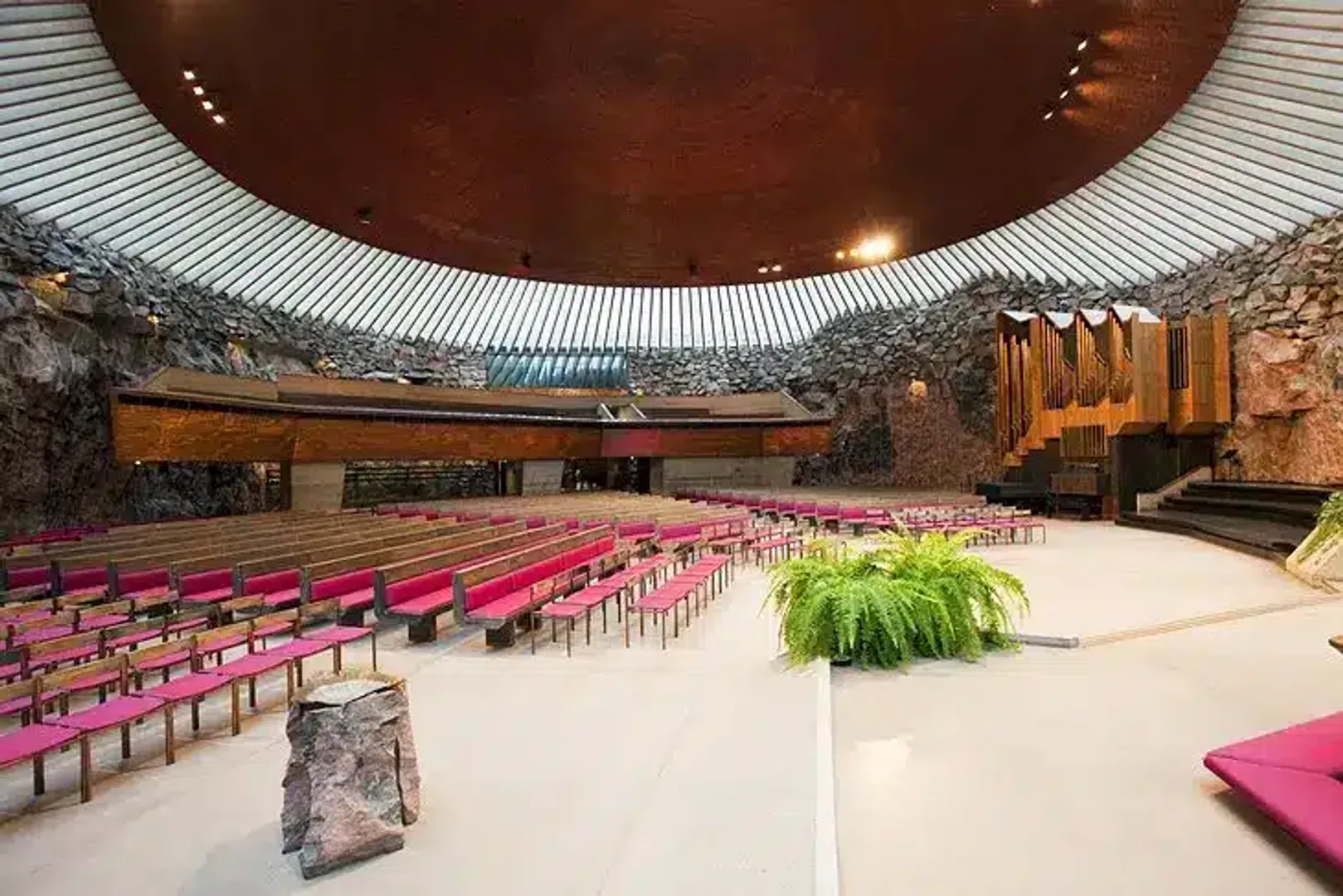
North of Helsinki’s Hietaniemi area, along Fredrikinkatu, is Helsinki’s Rock Church. Designed by Timo and Tuomo Suomalainen in the late 1960s, the underground interior of the church was carved out of and built directly into the ancient solid rock of the Helsinki peninsula. The inside of the church is bathed in a glorious natural light that enters through the glazed dome. It has a shallow circular dome (13 meters high) of copper sheeting and glass borne on concrete ribs. The church is also used as a concert hall due to its excellent acoustics created by the rough, unworked rock surfaces of the interior. Guided tours are available, and if visiting in summer, be sure to visit the on-site café for a unique dining experience.
Experience Traditional Finnish Culture at Seurasaari open-Air Museum
East of Helsinki’s city center is the island of Seurasaari, linked with the mainland by a footbridge. Here, you’ll find the excellent Seurasaari Open-Air Museum with its many old houses, farmsteads, a manor house, a church from Kiruna that dates back to 1686, and other timber buildings that have been brought here from all parts of Finland. This is the place to learn how Finns lived long ago, before the modern era. Nearby, at Meilahti 7, is an old timber house now occupied by the Friends of Finnish Handicrafts, with an exhibition of rye carpets and other traditional textiles. Visitors can watch the weavers at work, and the on-site shop sells examples of their handiwork.Guided tours are available, and afterwards stop at the attraction’s café and restaurant for a bite to eat. The island is also home to a popular public beach, so bring your swimsuit!
Linnanmäki Amusement Park
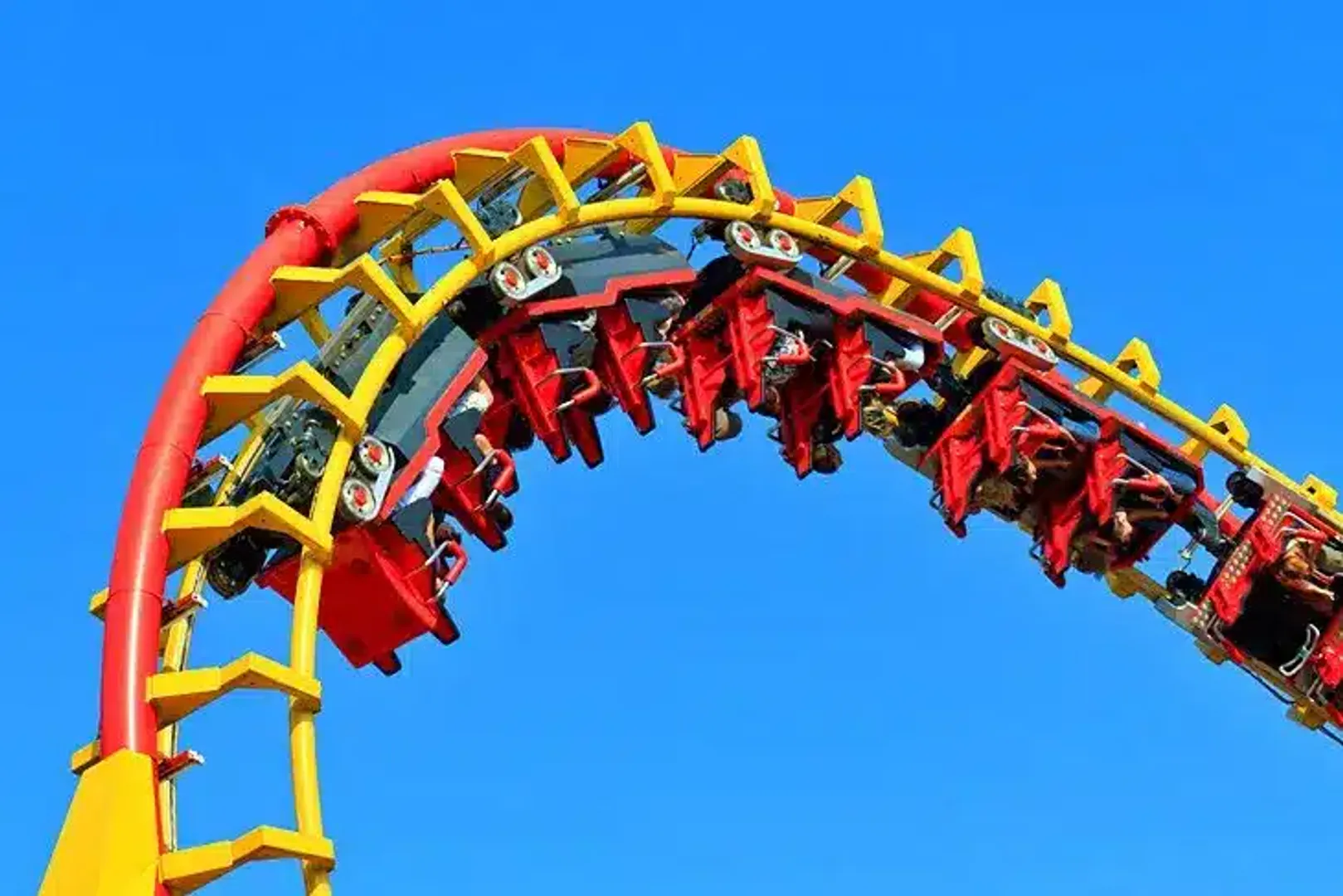
To the east of Olympic Stadium in Helsinki, beyond the railroad line, is the Linnanmäki amusement park. In operation since 1950, it’s a favorite family outing for locals and tourists alike. The park offers a great range of rides for all ages, as well as live entertainment, games, and plenty of places to get meals and snacks. There is a good selection of rides for the youngest visitors, including a kiddie train, little trucks on a track, a pirate ship, a little kids’ carousel, a playhouse, and even a kiddie roller coaster. Rides for bigger kids include a fun house, spinning coffee cups, a haunted hotel, bumper cars, and a raft ride.The park is also home to over a half dozen thrilling roller coasters, and several attractions that offer splendid views of Helsinki and the town of Linnanmäki, including the 53-meter observation tower, and a large Ferris wheel. Visitors can also enjoy the view from atop the 60-meter Rocket and the 75-meter free-fall tower – at least until the rides drop.
Museum of Contemporary Art (Kiasma)
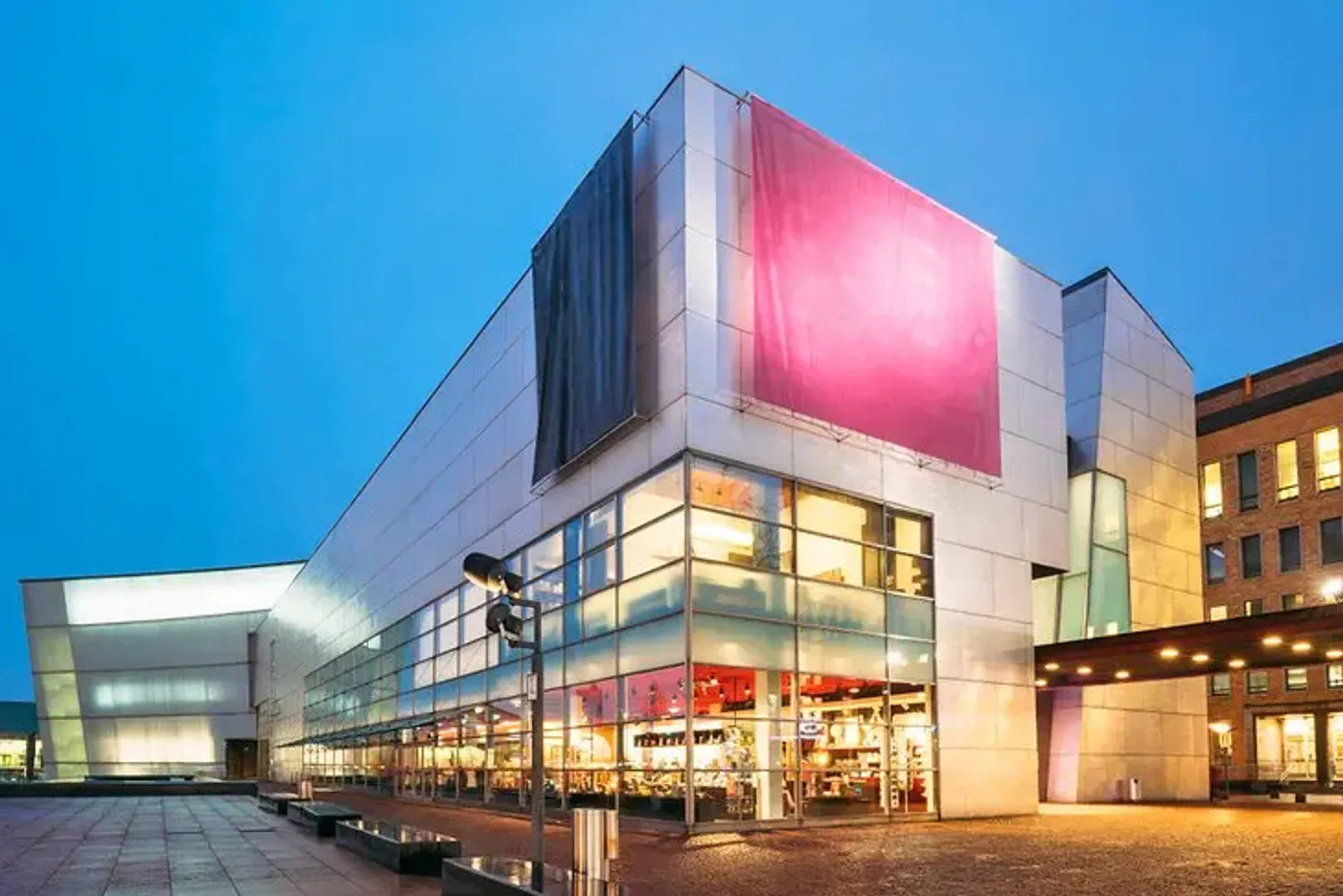
In a land renowned for its cutting-edge native architects, it’s ironic that the building considered one of Finland’s landmarks of modern architecture was designed by the American architect Steven Holl. The curvy exterior continues inside, creating exhibit spaces uniquely fitting for displaying contemporary works of art. Along with its collections of post-1960 Finnish art, the museum has a theater dedicated to experimental drama, music, and dance. A café and shop are located on the premises. Visitors also have the option to take a public or private guided tour of the museum that includes information on the works, the artists, and the museum building.
Helsinki Railway Station
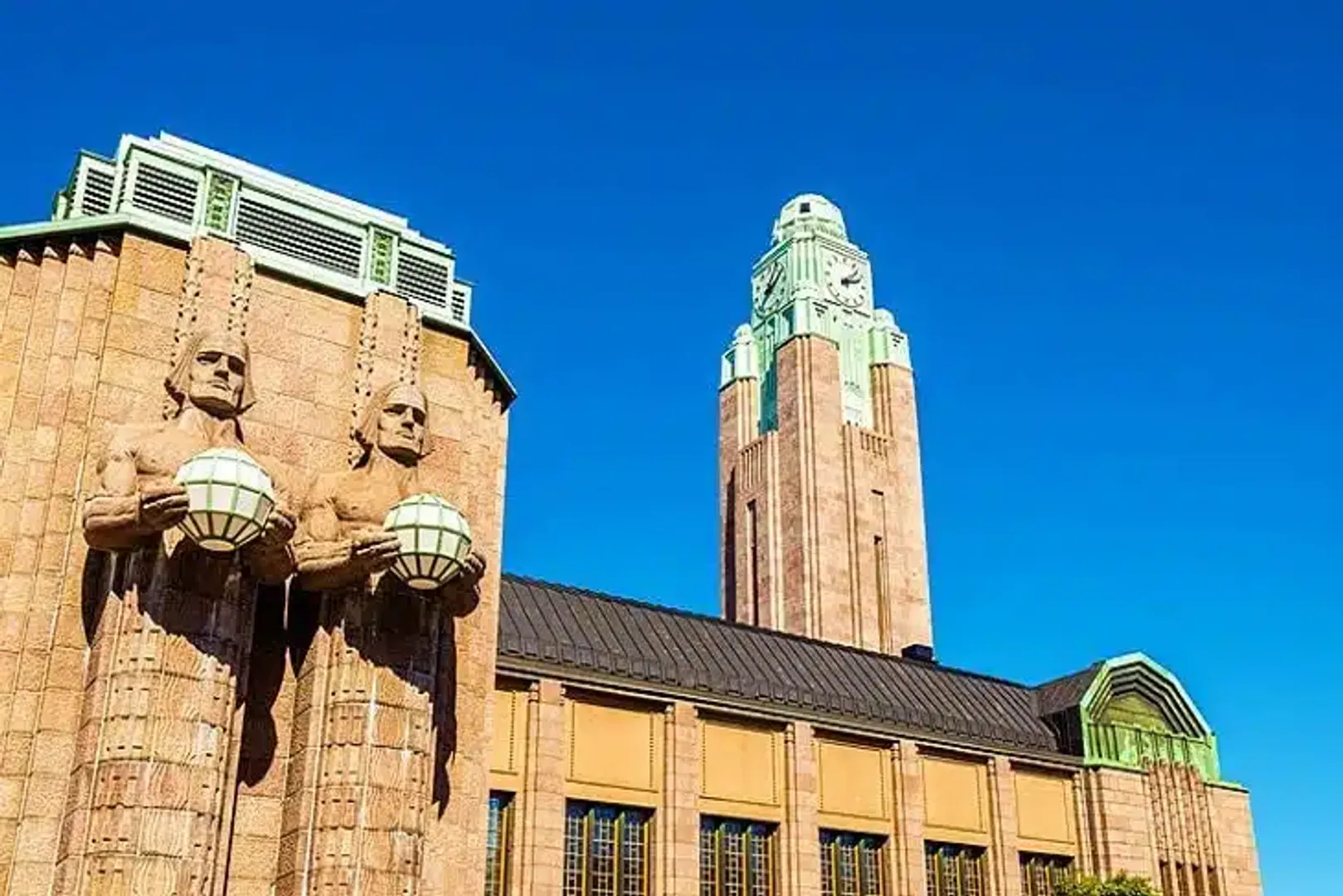
Helsinki’s strikingly original Art Nouveau railway station (Helsingin päärautatieasema) was designed by Eliel Saarinen and is especially notable for American tourists because its 48-meter-high clock tower was the first of several designs that finally resulted in Saarinen’s 1922 Chicago Tribune Tower – America’s first skyscraper. The exterior of the station is made of local granite, featuring an immense archway over the entrance, which is flanked by two giant statues on each side. The figures each hold globes that illuminate the façade at night, making a striking landmark. Inside, visitors will find towering arched halls and surprisingly delicate carved panels that decorate the walls.
Finlandia Hall
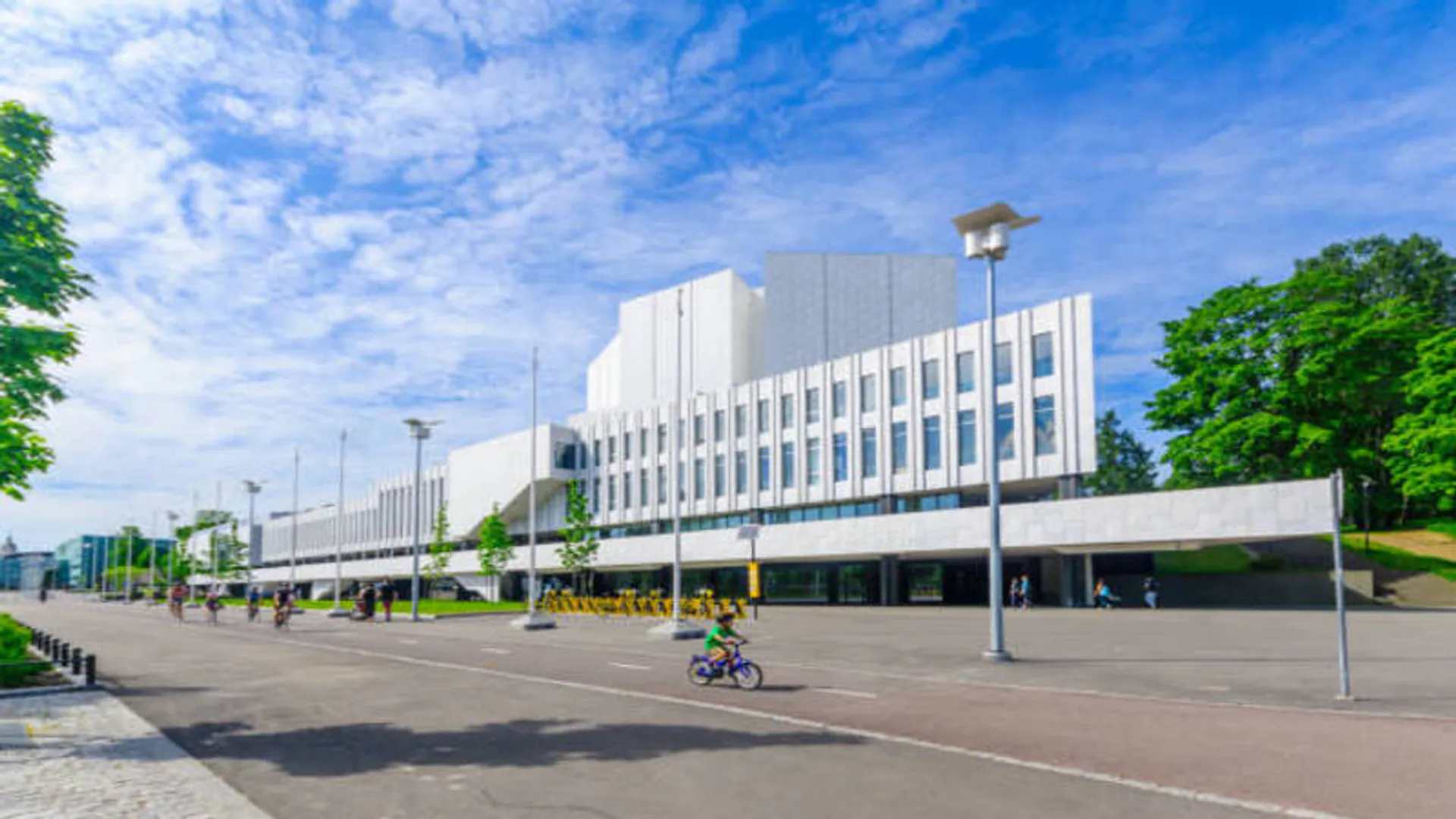
North of the Municipal Museum in Helsinki, on the shores of Töölö Bay (Töölönlahti), is the Finlandia Hall, a concert and convention hall designed by Alvar Aalto and built in 1971 with a white facade of Carrara marble. The marble is also used on the inside of the structure. Details appear in hardwoods and ceramics. The main concert auditorium is a stunning site and is famous for its acoustics. Another standout feature is the wide Venetian staircase that leads from the ground floor to both the main auditorium and chamber music hall. The Final Act of the Conference on Security and Cooperation in Europe was signed here in July 1975. To the north of the hall is an excellent park (home to large chess boards and chess pieces), and beyond this again is the new Finnish National Opera House, inaugurated in November 1993 with a performance of the opera “Kullervo” by the Finnish composer Aulis Sallinen. Check the website for frequent updates on events, prices, and openings.
Korkeasaari Zoo
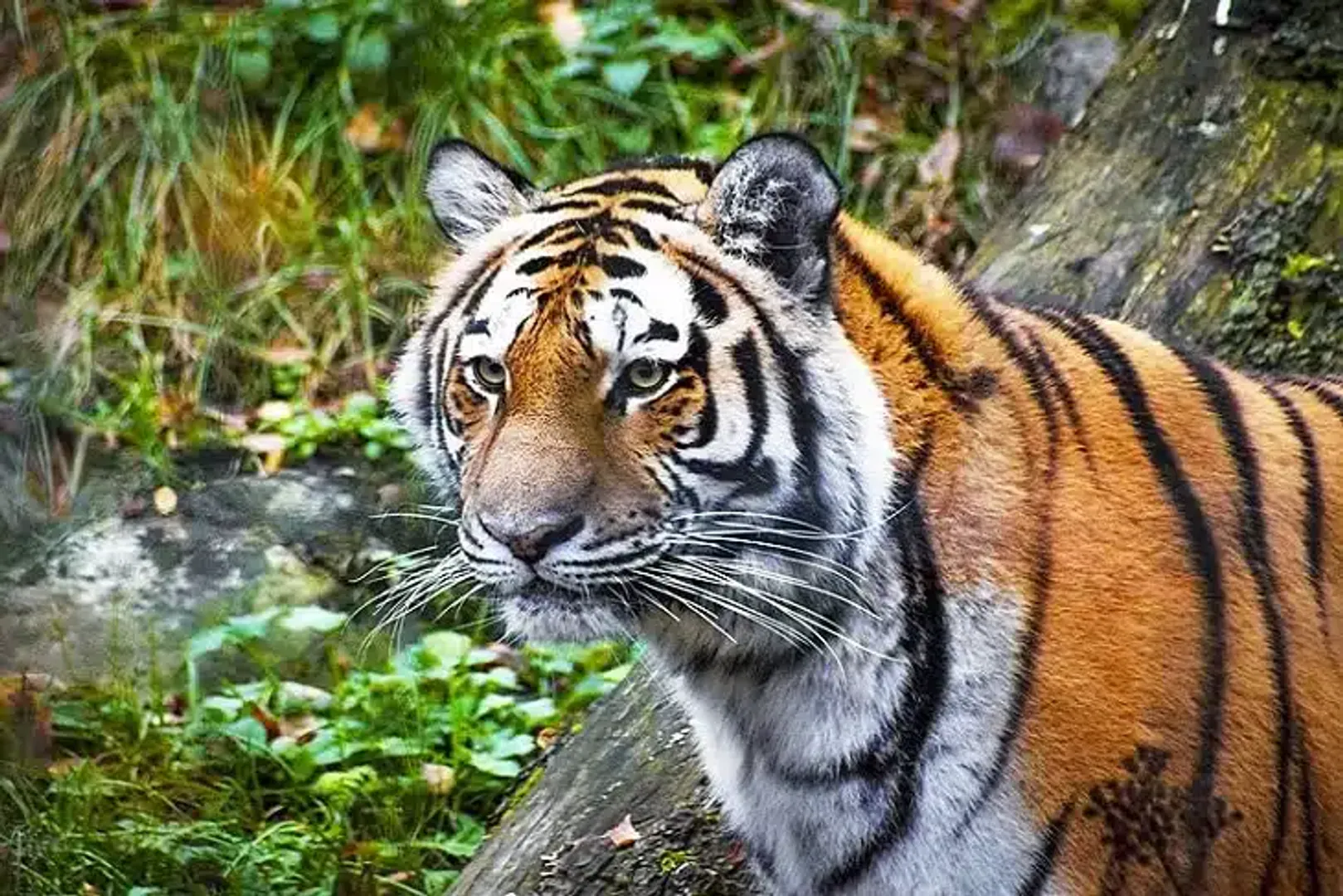
Founded in the 1880s, Korkeasaari Zoo is one of the oldest in the world, and holds a foremost place for its exceptional breeding programs for endangered species. They have been especially successful with breeding snow leopards and other big cats, such as the Amur and Siberian tiger. As in any good zoo, the environments have been designed to be as close as possible to natural habitats, and nearly 1,000 plant species grow here to replicate the native environments of the 150 different animal species. The zoo is open all year-round, and visiting the tropical houses is one of the favorite things to do in Helsinki in the winter. The zoo is on an island, and you can get here by ferry from May to the end of September. The rest of the year, you can get here by bus.
The National Museum of Finland (Kansallismuseo)
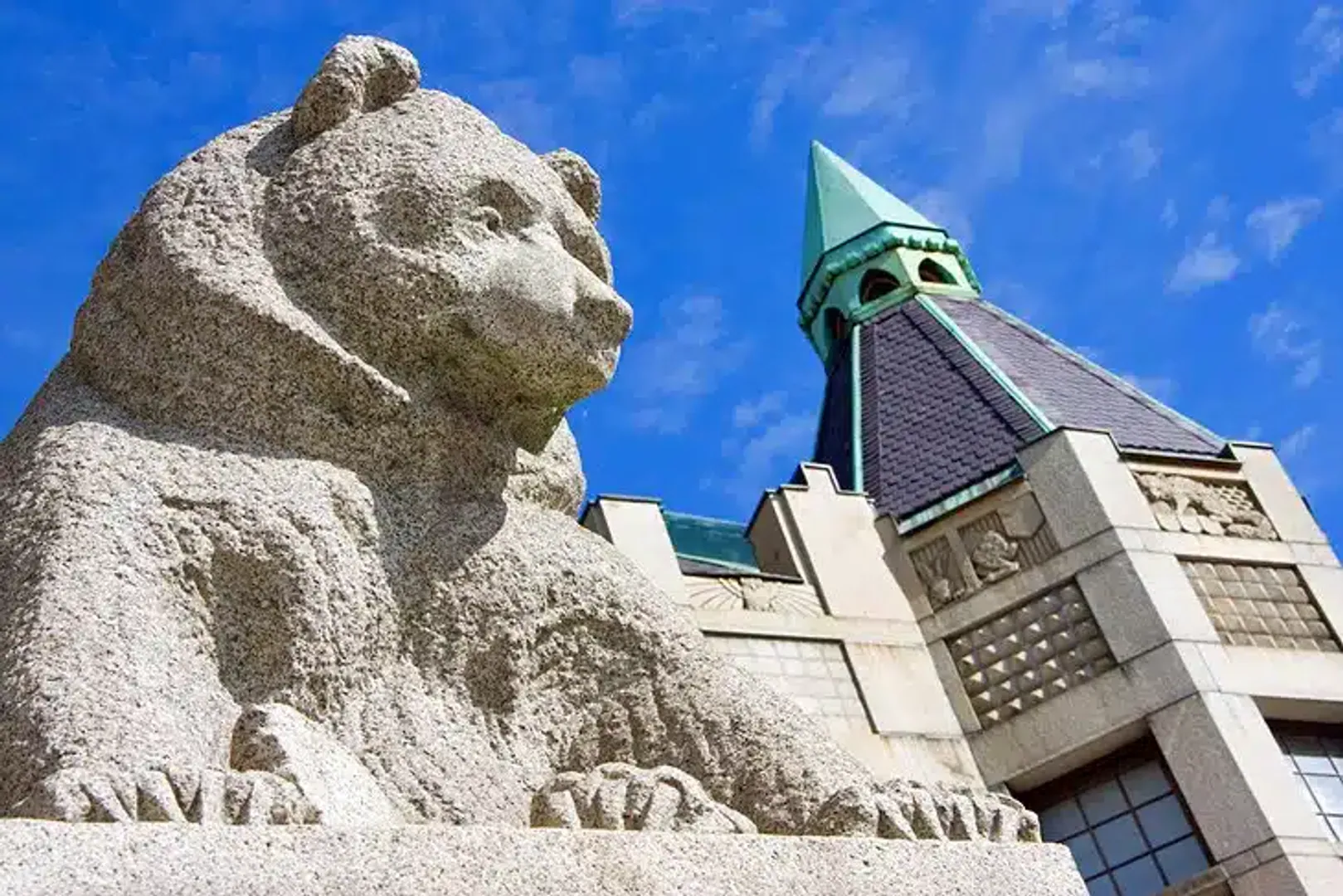
The National Museum of Finland (Kansallismuseo) was built in 1912 in a National Romantic style, Finland’s own take on the Art Nouveau movement that was popular in Europe at the time. This style is especially appropriate for a museum whose purpose is to collect and interpret material on the culture and ethnography of Finland. Of note is the Finno-Ugrian collection with traditional costumes and everyday cultural objects. The prehistoric section is the largest permanent collection of archaeological materials in the country. Various displays also document the development of Finland from the Middle Ages through the Swedish and Russian empires and into a modern state. The entrance hall is decorated with fabulous ceiling frescoes inspired by the Kalevala, the national myth of Finland. The frescoes were painted by Akseli Gallén-Kallela, perhaps Finland’s best-known artist. Opposite the National Museum, in a park, is the Municipal Museum.
Uspenski Cathedral
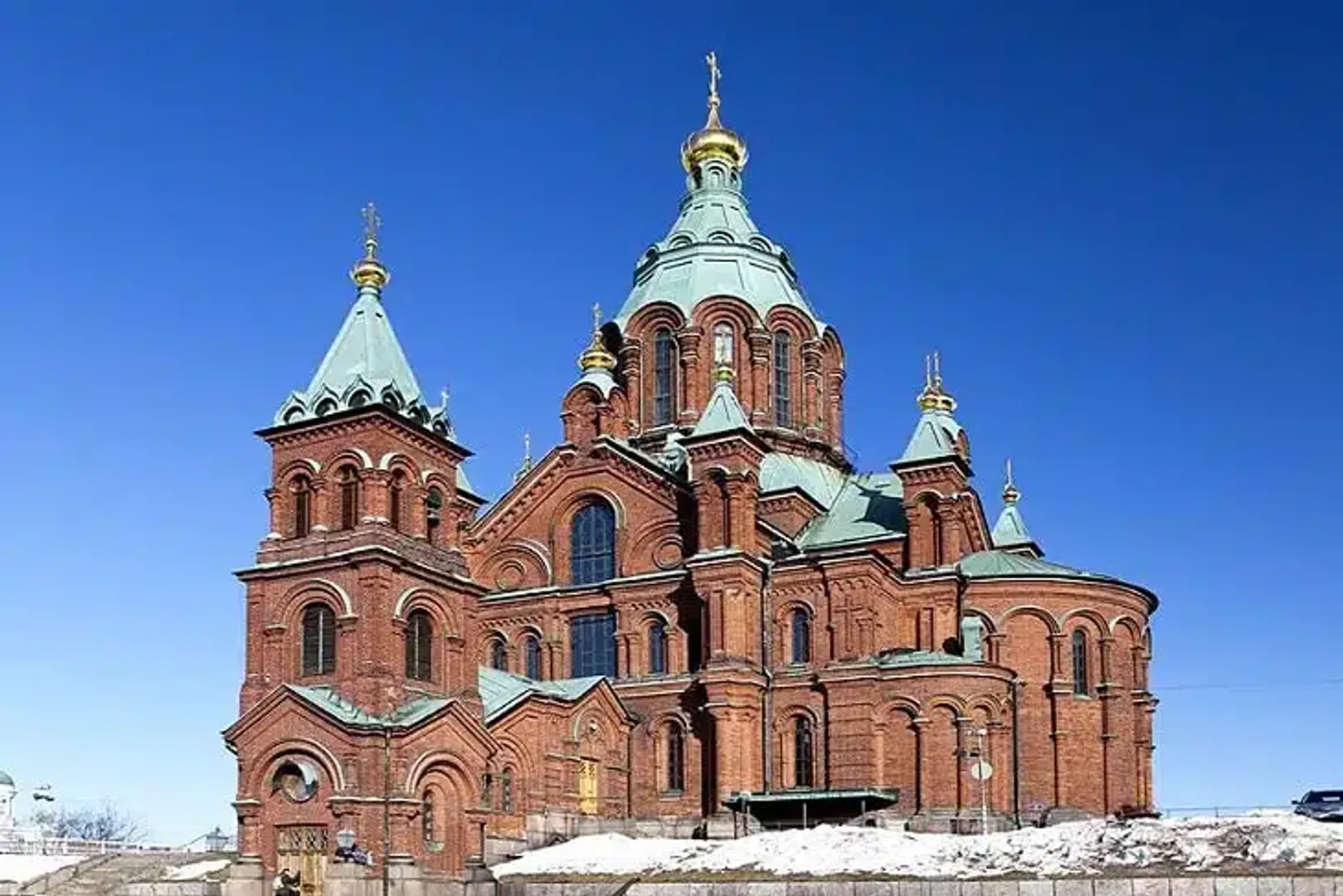
One of two imposing churches that dominate the skyline above Helsinki’s harbor, Uspenski Cathedral (Uspenskin katedraali) is an eye-catcher. This stunning brick building is notable for its multiple towers and spires topped by 13 gold cupolas. The interior of this Orthodox Church is equally impressive, filled with altars, icons, and crosses, the intricate patterns on its arches set against block marble and a preponderance of gold embellishments.
The Gallen-Kallela Museum
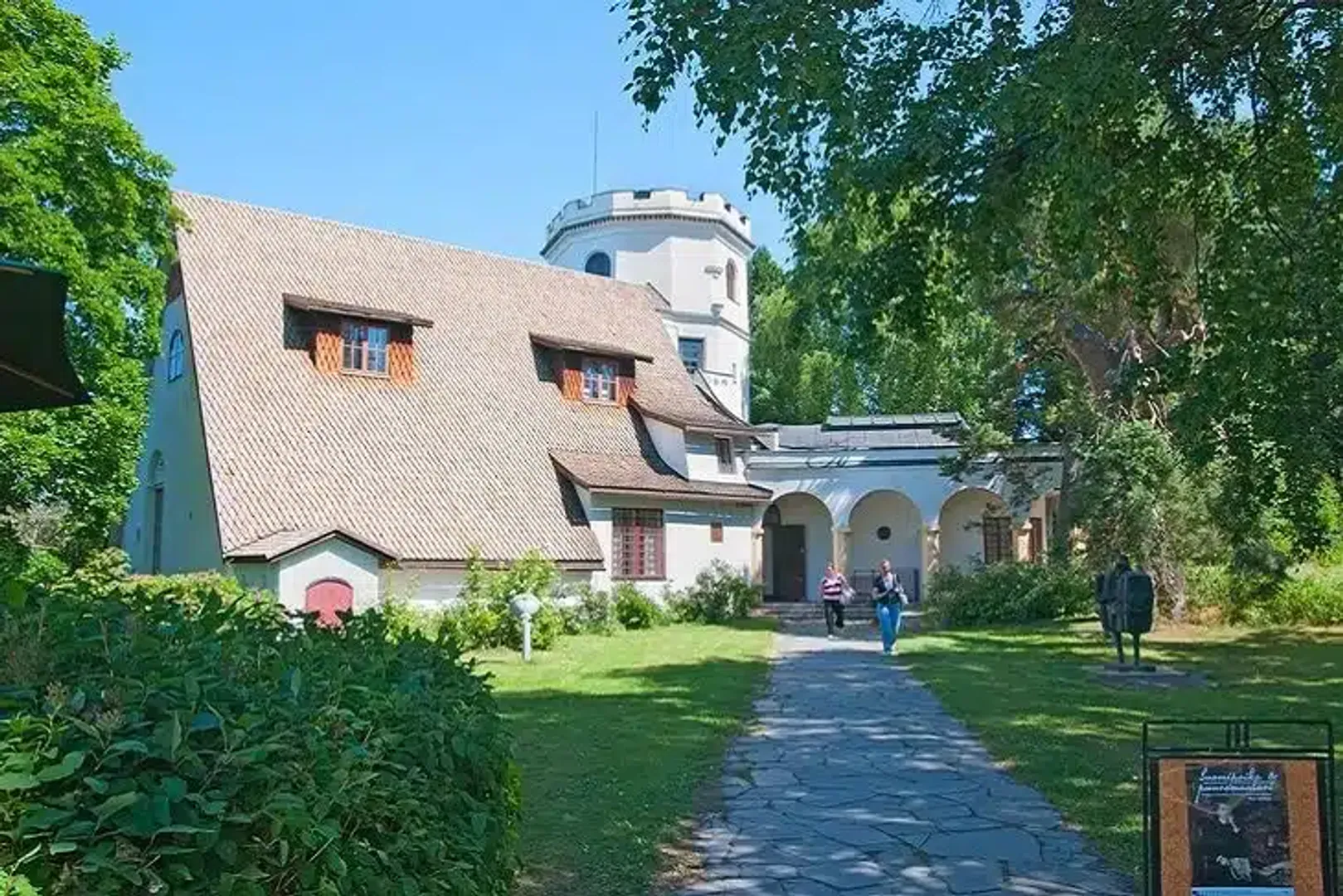
Akseli Gallen-Kallela is perhaps Finland’s most important and certainly most impressive painter. The Gallen-Kallela house was built in 1911-13. Better known as Tarvaspää, the house was opened to the public as the Gallen-Kallela Museum in 1961. It contains a permanent exhibition of Gallen-Kallela’s own paintings, graphics, and tools. An excellent café is located on site as well as a fine little store. The Gallen-Kallela Museum is located on the beautiful shore of Laajalahti Bay in the eastern part of Helsinki, about ten kilometers from the center. It can be reached by car or by the walking and bike path from Munkkiniemi in Helsinki and Ruukinranta in Espoo.
Finland may be a nation that favors simple homemade dishes, but that doesn’t mean that the capital city of Helsinki doesn’t still have plenty of fine dining restaurants for top quality meals prepared to Finland’s notoriously high standards. These are some of the best fine dining establishments in the city to go for a night out. The owners of this restaurant and bar have used their culinary experiences from around the world to open Boulevard Social, combining dishes from Turkey, Greece, Lebanon, Tunisia, and Morocco. This makes it the first restaurant in Helsinki to focus exclusively on Mediterranean cuisine, while maintaining the atmosphere and décor of a laidback bistro.
Ravintola Loiste Rooftop
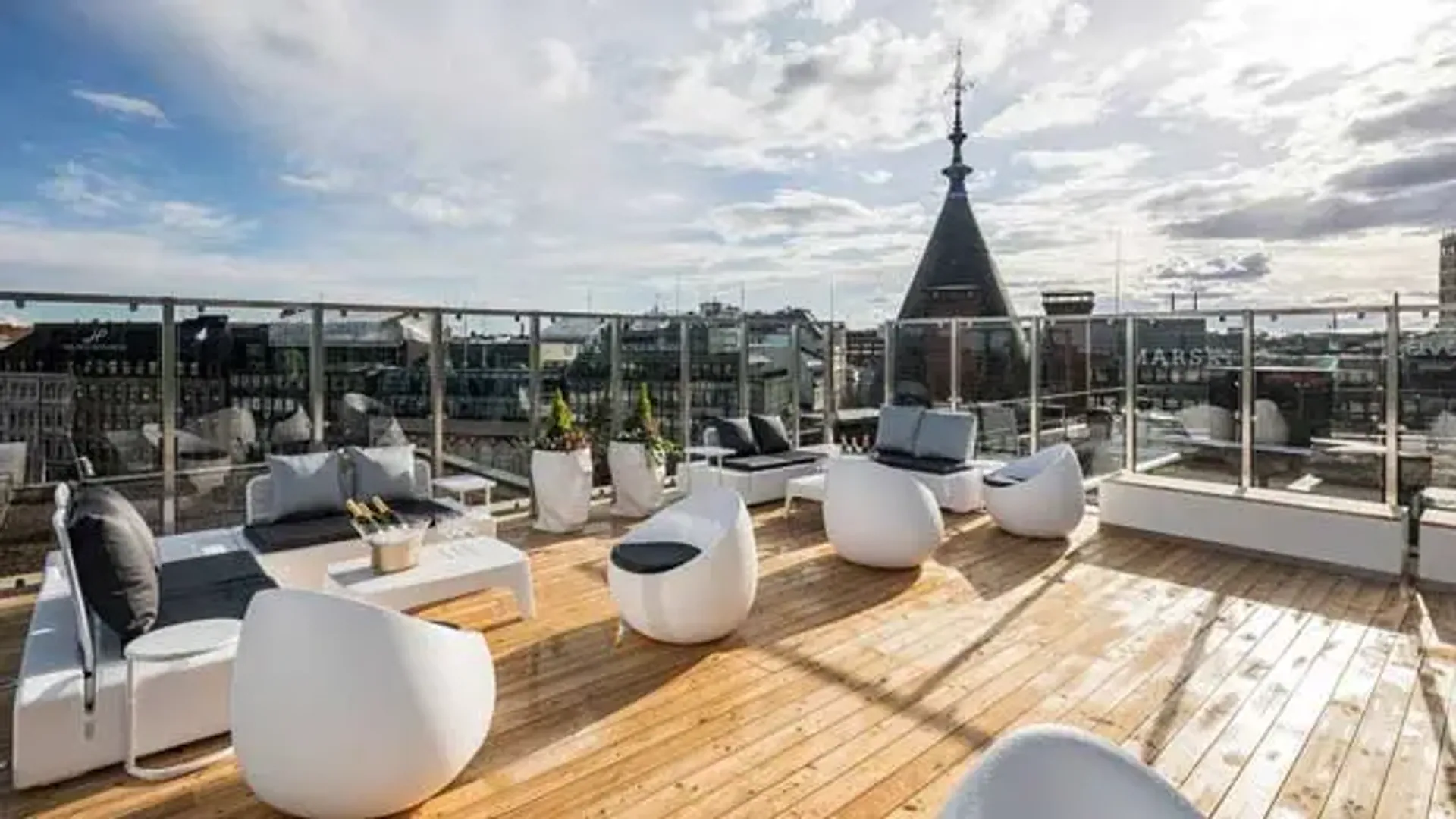
This rooftop restaurant on the 10th floor of the hotel Vaakuna is located in the very centre of Helsinki. You can enter either via the hotel lobby or via a separate entrance. The retro rooftop bar Loiste has an authentic 1950s feel. The terrace offers unforgettable panoramic views of Helsinki Central Station as well as the Parliament House. A must on a summer evening. Please note that the rooftop terrace itself is only open during the summer months.
Shop in Helsinki’s Market Square
Inari, located in the centre of Helsinki, is an intimate seven-table restaurant offering diners a spectacular Michelin-starred experience. The innovative fifteen-course menu, which combines Finnish cuisine with Asian influence, is the brainchild of Head Chef Kim Mikkola. Mikkola and his team focus on guests with the best, locally-sourced ingredients and finest imported spices and strive to deliver complex, seasonally-inspired flavours. Mikkola previously worked at Copenhagen’s Noma, where he earned his first Michelin star at age 31. His current restaurant, Inari, is named after the town in Lapland, but also invokes the goddess of Shintoism, a major religion in Japan.
Hietalahti Market Hall
Helsinki is well-known for its amazing food halls, but Hietalahti Market Hall is by far the best! A visit will show plenty of other diners and shoppers, so this is a great place to mingle with the Helsinki locals. You can dine on a multitude of cuisines outside the hall, or if you want to shop inside for all of the ingredients for your next meal at your apartment, then this is the place! If you are fond of markets, you may also want to visit the old market near Kauppatori, or you’ll find most of the locals at the popular open-air market. These are great places to try the local foods and really immerse yourself in the Finnish culture!
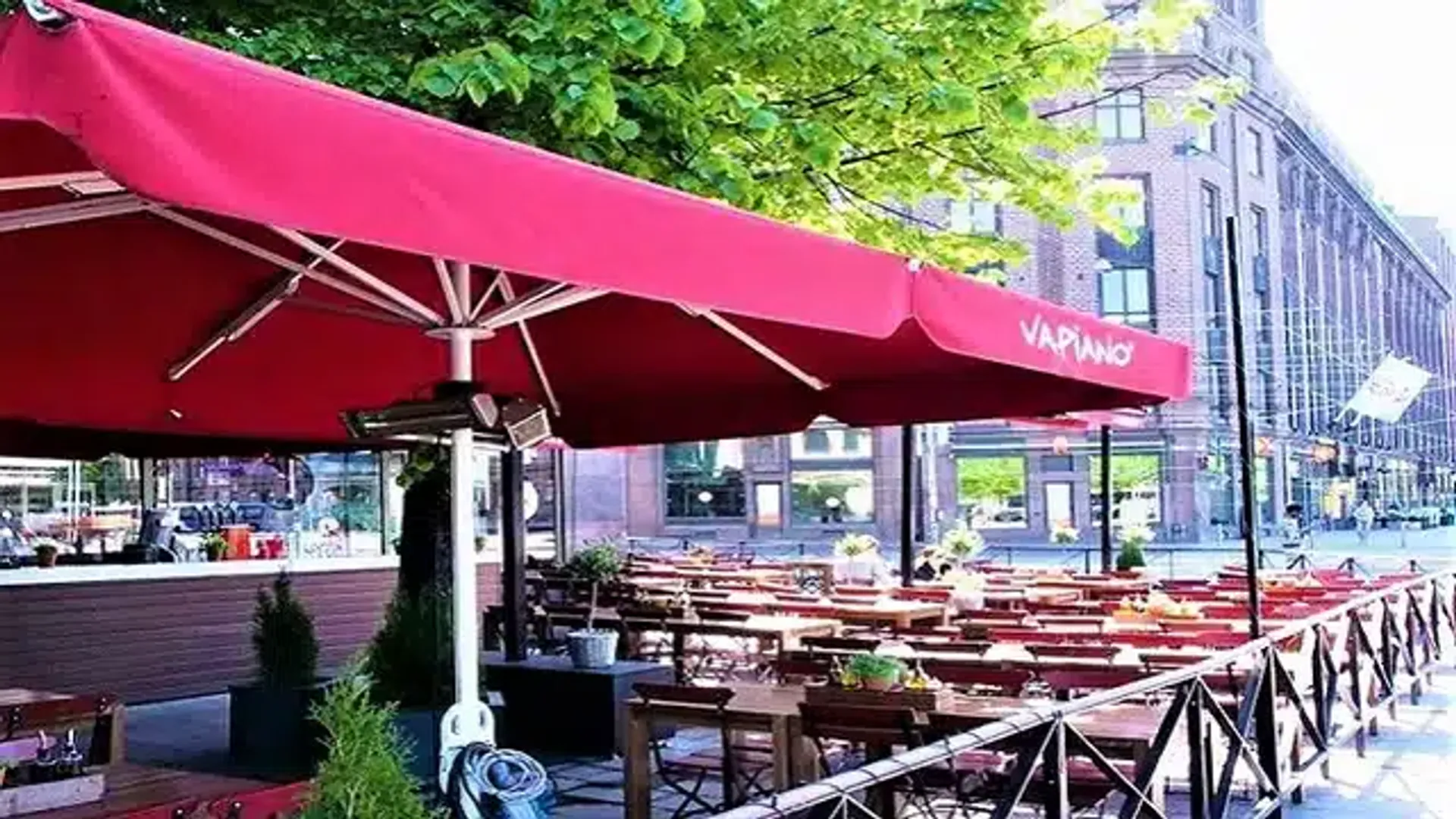
Vapiano
Vapiano is one of the most affordable restaurants in Helsinki, offering a myriad of tasty local dishes. Plus, it’s located right in front of the Central Railway Station. Talk about convenience! As you begin to explore Helsinki, you’ll find that there are so many places to go and so many things to experience! When you are studying abroad, you will feel right at home in no time. If you know of any other hidden gems around Helsinki, feel free to share in the comments section down below.
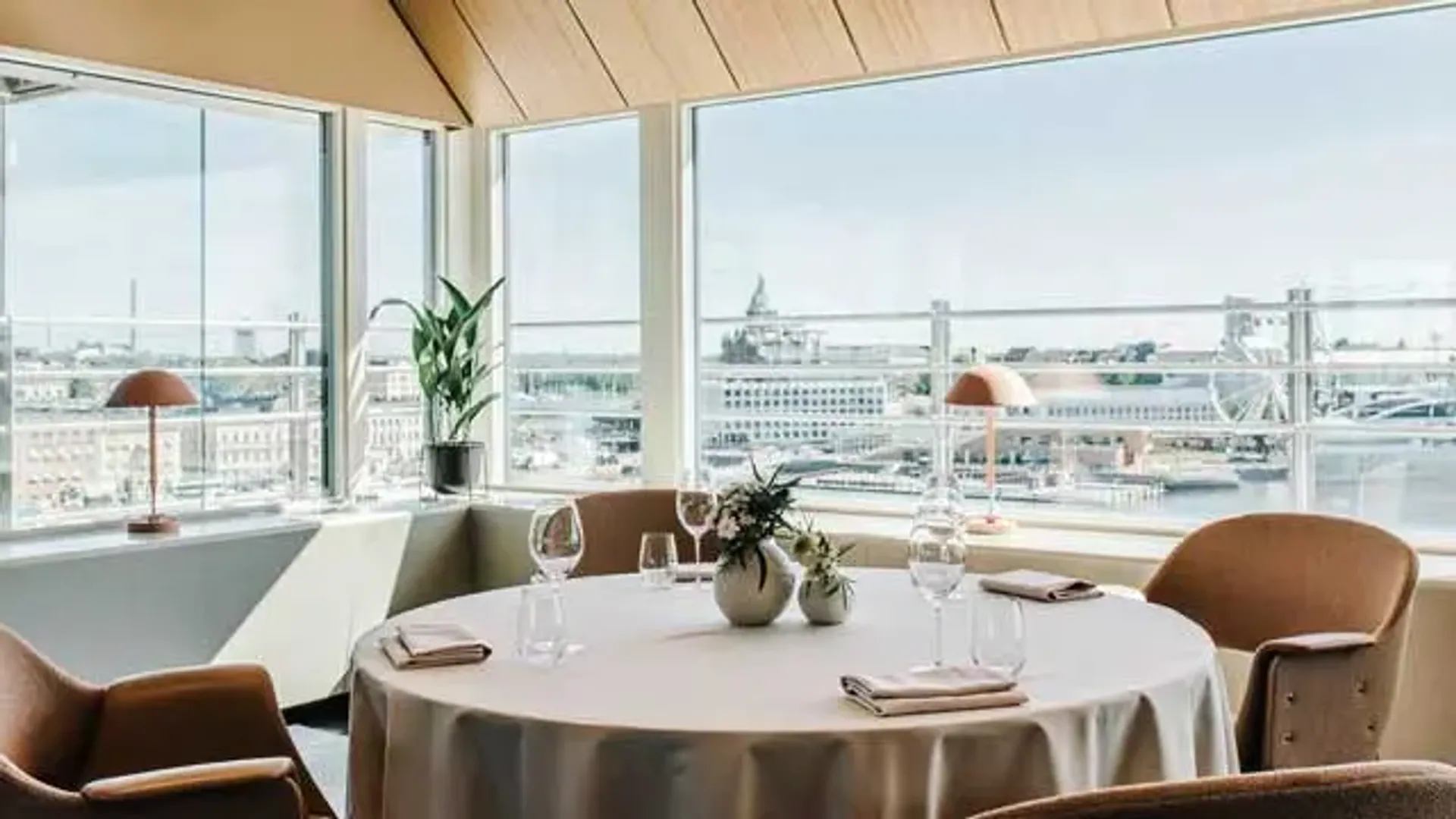
Restaurant Palace
Established in 1952, Palace has always been a pioneer of Finnish gastronomy. It was the first Finnish restaurant to receive a Michelin star in 1987. With views over the city and its seascape, the restaurant is located on the 10th floor of a historically significant building that was originally constructed to mark the 1952 Olympic Games in Helsinki. Today, the Palace kitchen is headed by Chef Eero Vottonen who, together with his team, aims to create an innovative yet sophisticated Nordic dining experience. The restaurant has been nominated one Michelin-star.
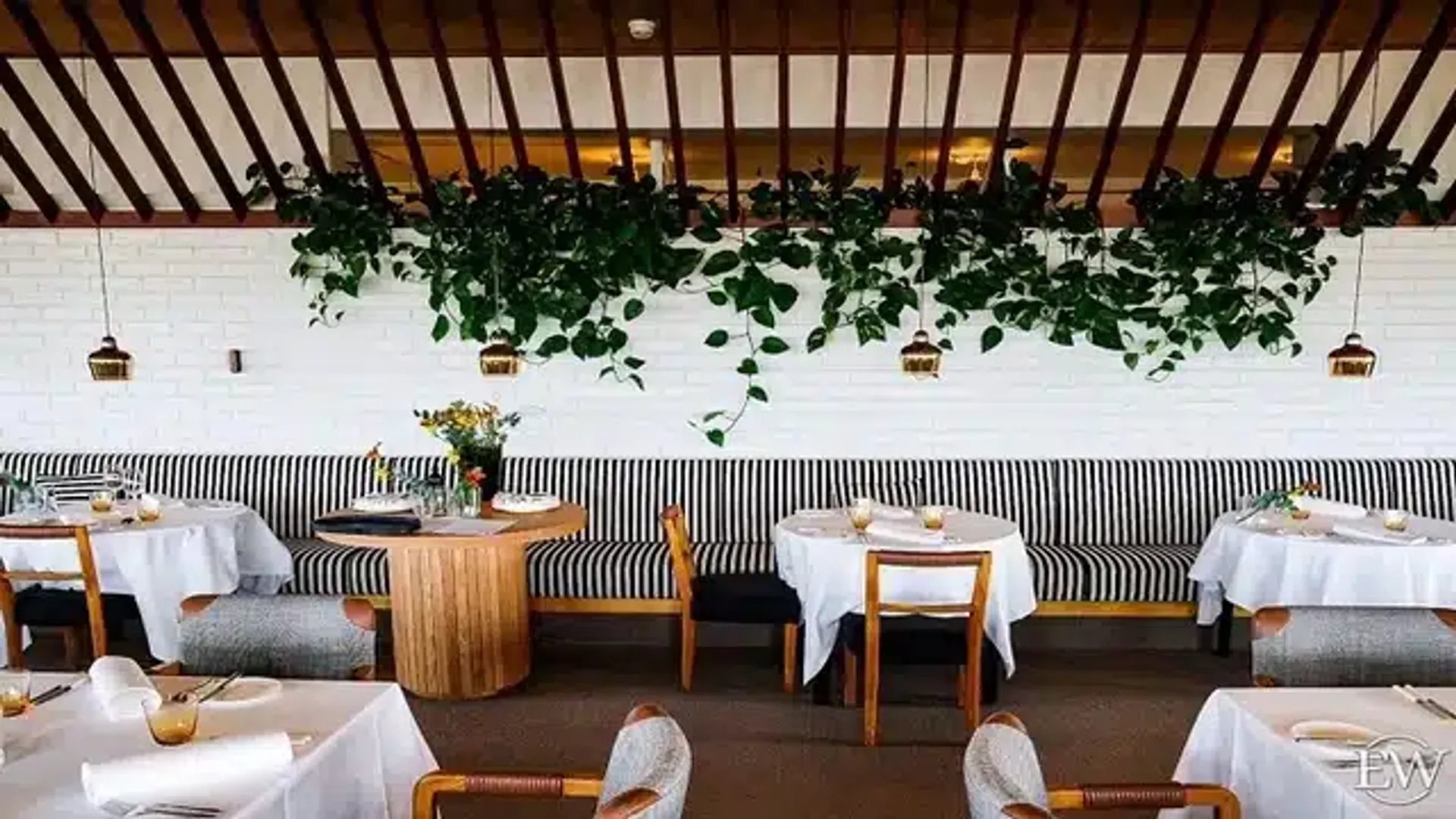
Restaurant Savoy
Restaurant Savoy has been at the very top of Helsinki’s restaurant scene since the 1930’s. Field marshal Mannerheim (or “Marski”) was among the most well-known regulars, and his favorite dishes can still be found on the menu, eg. the vorschmack and filled-to-the-rim favorite shot. The Savoy interior was designed by architects Aino and Alvar Aalto who brought their human-centered and functional touch to every detail in the restaurant. Opening in June 1937, the interior was rich in various species of wood and lush planting, and the use of fabrics was vivid. The atmospheric dining hall was framed by terraces on three sides. The interior showed the Aaltos’ preference for welcoming and comfortable furniture and their sensitivity towards high-quality natural materials. In 2019-2020, the restaurant was re-designed by Ilse Crawford and Studioilse and renovated in co-operation with Artek, Helsinki City Museum and the Alvar Aalto Foundation.
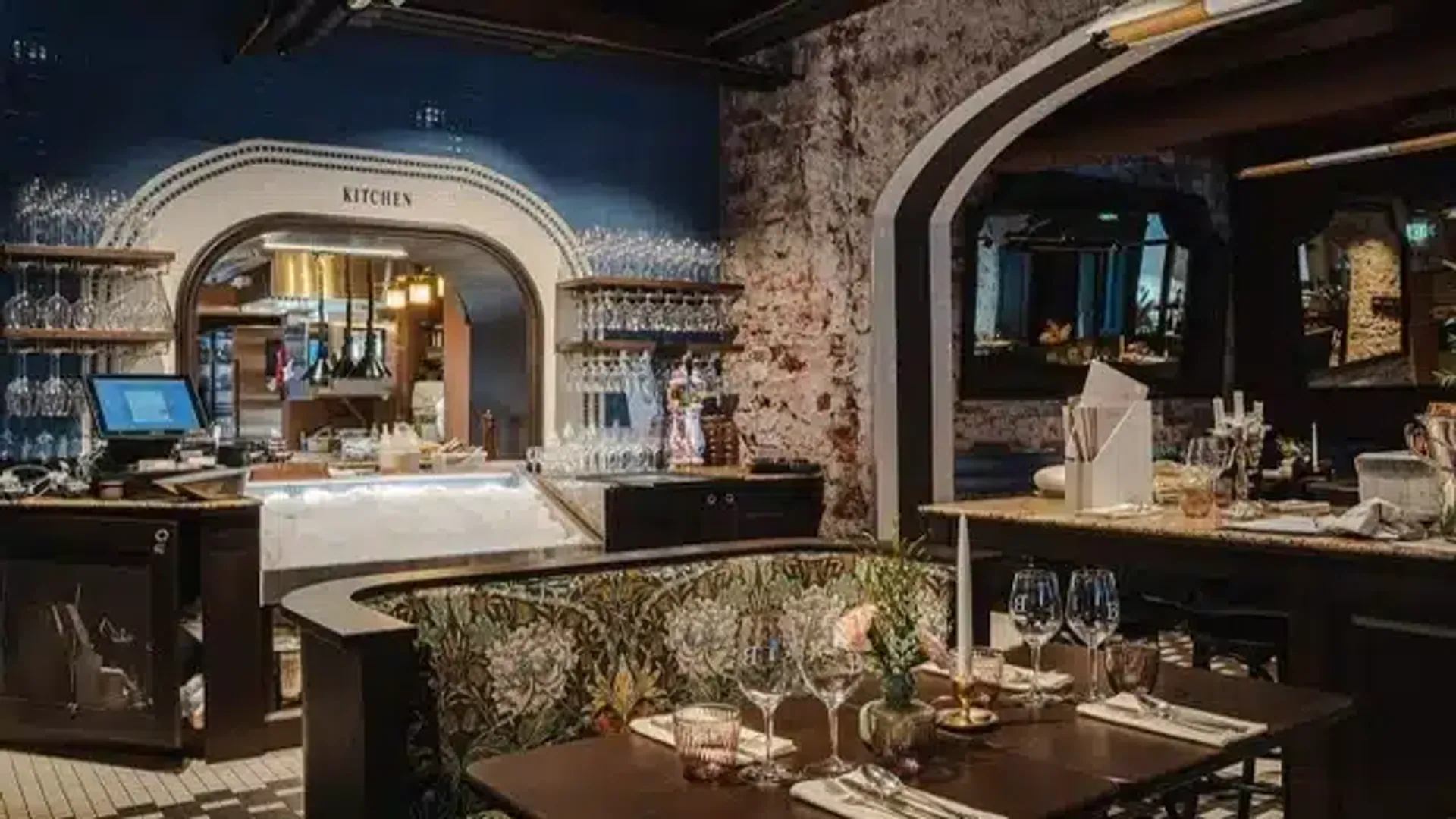
Bistro Bardot
Bistro Bardot, BB between friends, is a relaxed, characteristically bubbly, modern bistro-brasserie in the heart of Helsinki, which embraces the traditional French cuisine. The bistro offers carefully executed food, emphasizing the quality ingredients, from morning to late night. The heart of the seasonal kitchen is the seafood from the raw bar, not forgetting the vegetables, birds and good quality meats. A seasonal selection of wines and cocktails compliment the menu. It’s also possible to just pop in for a drink at Bardot’s velvety bar.
Restaurant Olo
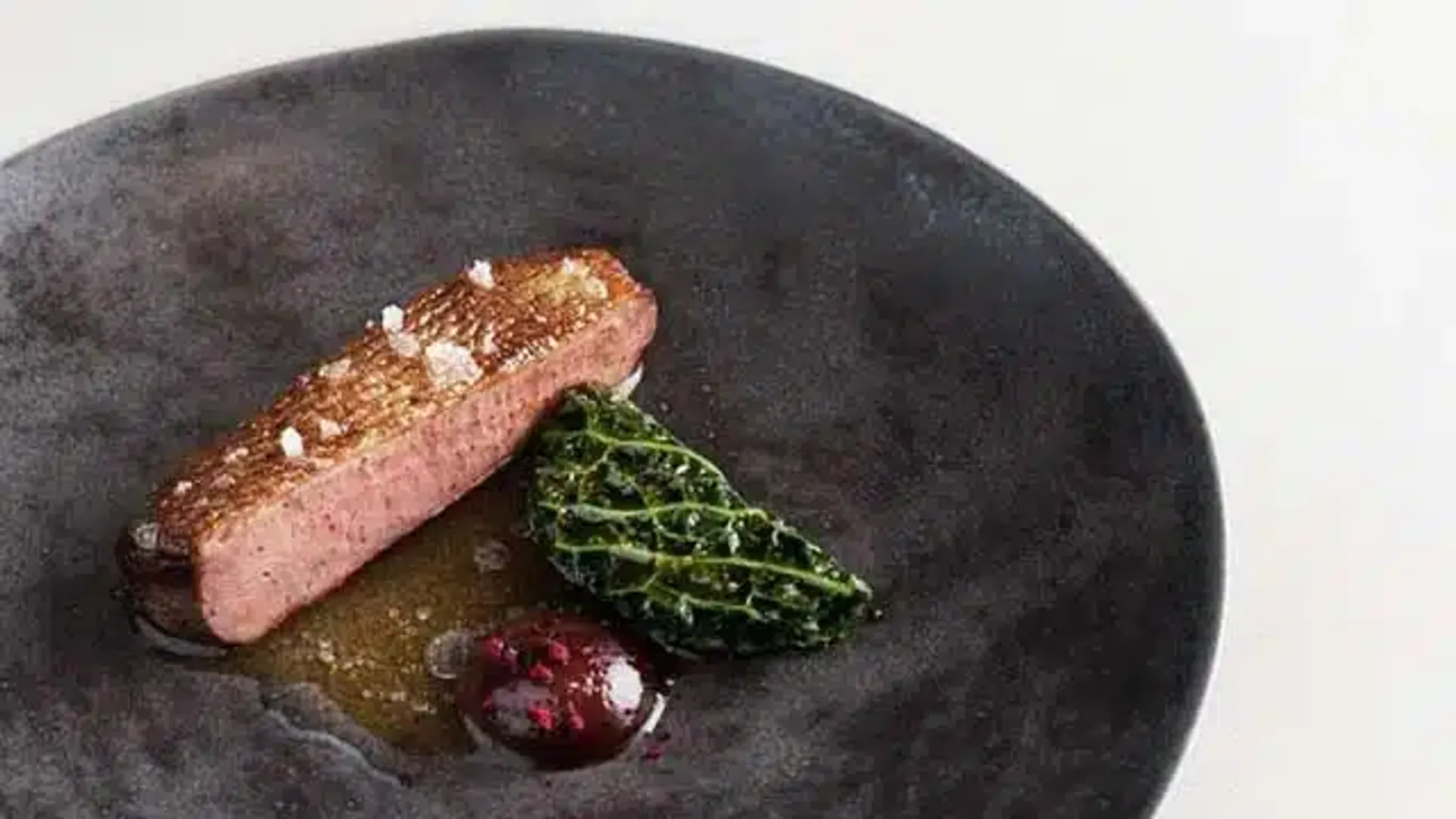
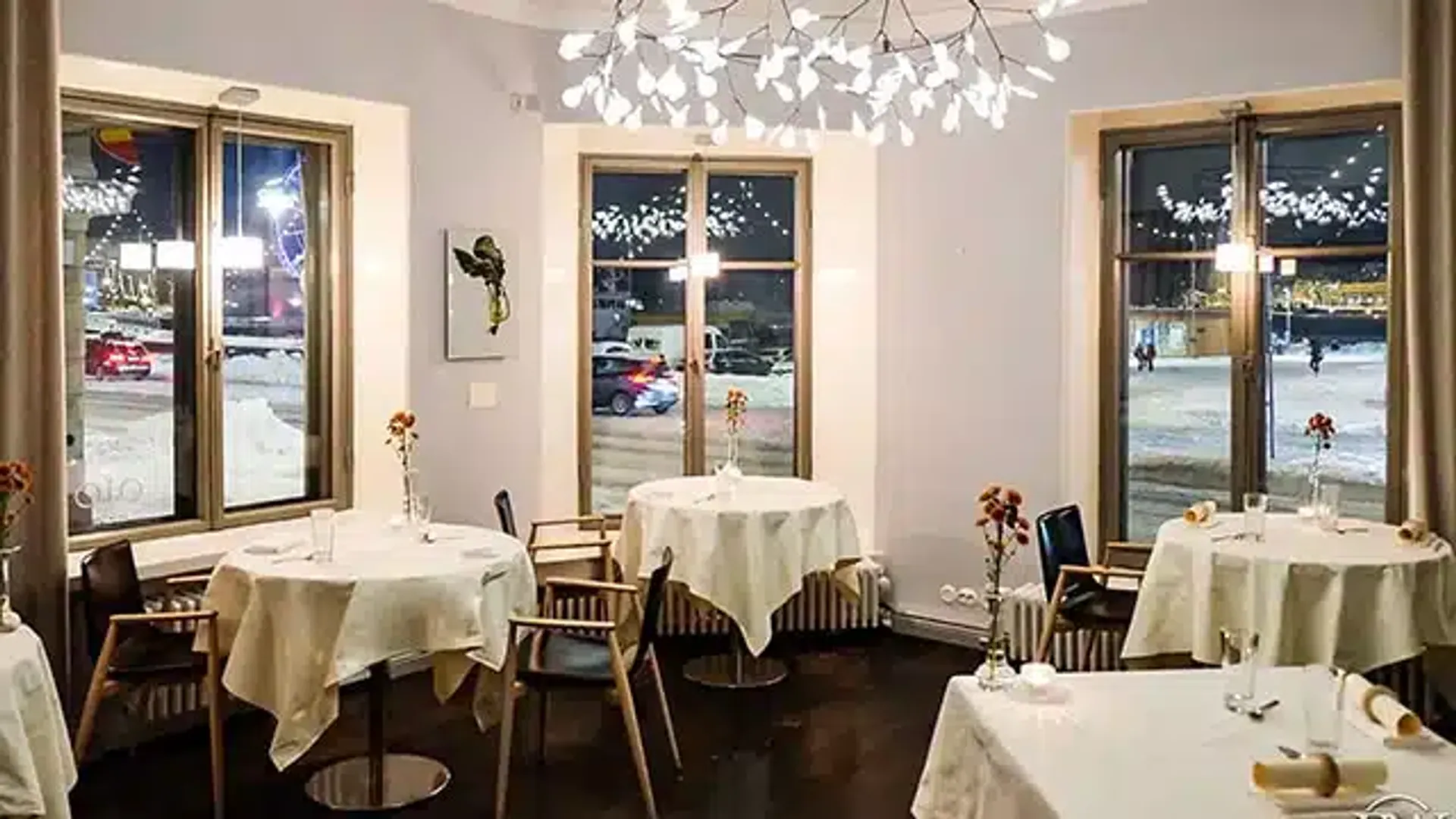
Olo is a modern Nordic gourmet cuisine restaurant at the heart of Helsinki. Olo’s kitchen represents the modern Nordic cuisine, where traditional raw materials of the North are well-respected. The cuisine aims to offer clarity of design and generous flavours as known from our grandmothers’ times. The menu follows the yearly cycle of the Nordic nature, bringing to the table only what is at best at a given time. The natural and clean flavours of land and sea reign in Olo’s kitchen. The restaurant has a Michelin-star since 2011.
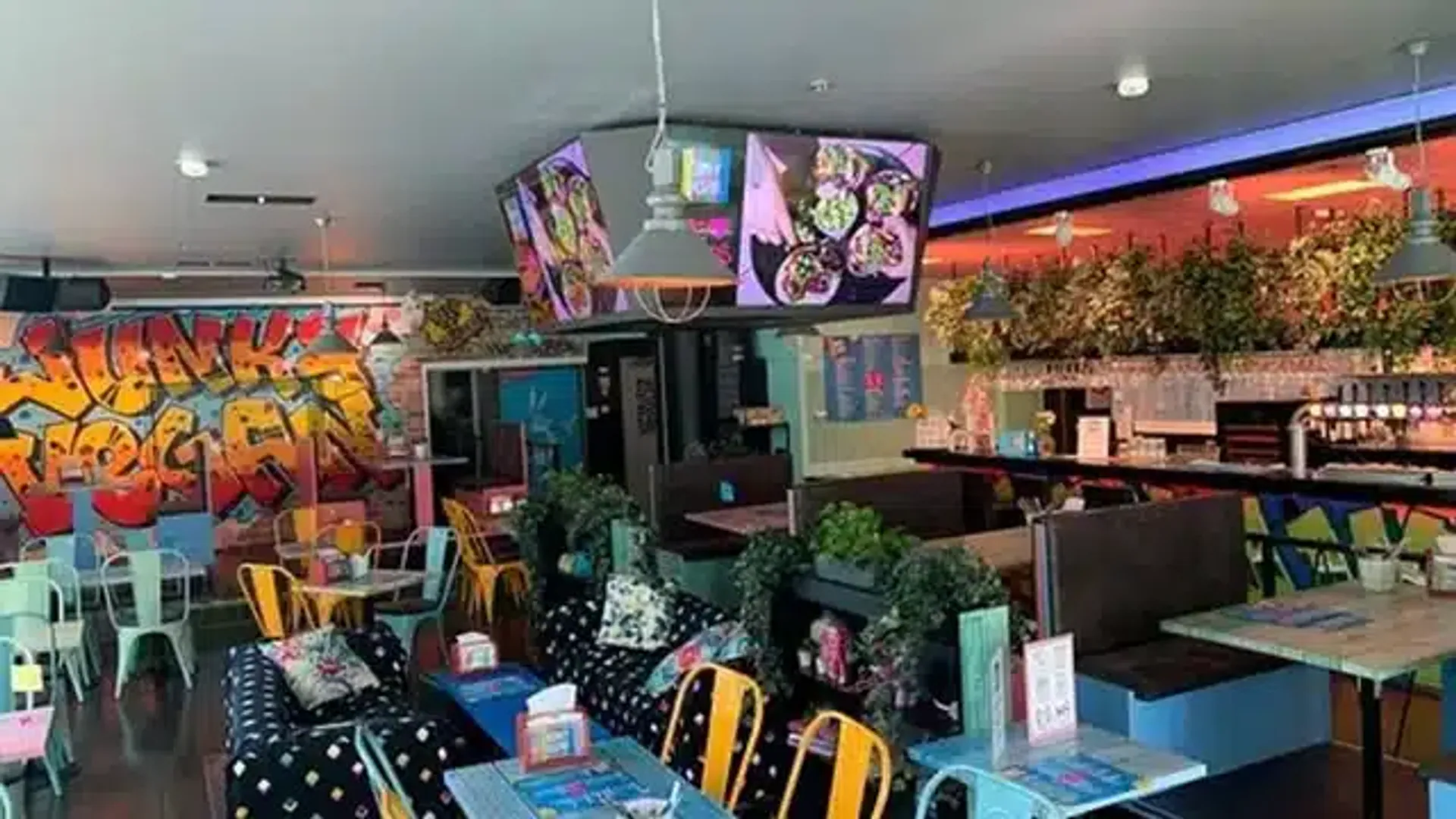
Junk y Vegan
Bistro Bardot, BB between friends, is a relaxed, characteristically bubbly, modern bistro-brasserie in the heart of Helsinki, which embraces the traditional French cuisine.
The bistro offers carefully executed food, emphasizing the quality ingredients, from morning to late night. The heart of the seasonal kitchen is the seafood from the raw bar, not forgetting the vegetables, birds and good quality meats. A seasonal selection of wines and cocktails compliment the menu.
It’s also possible to just pop in for a drink at Bardot’s velvety bar.
Restaurant Nolla
Nolla is a restaurant where great food goes hand in hand with sustainability. The idea of Nolla was born out of a desire to serve great food without compromising sustainability. The restaurant aims to minimize the amount of waste produced with everyday actions that follow the restaurants sustainable values and waste-free ideology. All of the ingredients are mindfully sourced from local farmers, fishermen and producers, with a strong focus on sustainability. Nolla places a heavy emphasis on seasonality, which is how it is possible to offer the best of local produce all year round without having to sacrifice the restaurants values. Nollas approach to sustainability goes beyond the basics like food packaging and plastic. The restaurant has thought of every little detail, from clothing to energy consumption. Nolla collaborates with passionate small producers to offer wines that are produced according to sustainable agricultural practices. Nolla is also proud to offer its guests a changing selection of fresh and vibrant craft beers from Mamu Brewing, Nolla’s own in-house microbrewery. An interesting selection of other local beers is always available too.
Conference Schedule
10 September 2025
0 minutes
The detailed Conference Program will be sent to all registered participants one week before the conference.
Modes of Presentation
10 September 2025
3 minutes
Oral Sessions
The presentation times for oral sessions are as follows: contributed presentations are 15 minutes.
Please note: You must provide your presentation for preloading. Please submit your presentation (in English, copy-edited and proofread) via email to support@ntteconf.org, no later than 10 business days before the events starts.
If for any reason, you are unable to send your presentation in advance of the Conference, please have your presentation on USB storage.
Poster Sessions
Design your poster so that it is easy to read and include some visuals or charts. Allocate the top of the poster for the title and authors’ names and affiliations. Remember the audience may have a short time frame to read your poster.
Poster boards will be provided to display posterpresentationmaterials. The board size is A1 international paper size.Materials, including the title, should not extend beyond the poster size.
Do not use foam core or any thick or multi-layered materials or pushpins directly on the poster boards. Please make sure that the material used for the poster allows it to be posted on the boards.
All posters should be based on the submitted abstract as accepted by the Scientific Committee.
Please bring your poster with you.
Virtual Sessions
The conference program for Virtual presentations will be emailed to participants one week before the conference.
Virtual presentations will be delivered via an online electronic forum (Zoom). Virtual session attendees will receive the Zoom invitation link a few days before the Conference. Joining the Zoom session is easy and takes just a few seconds. Simply click the link in the invitation, and you will proceed to your session immediately.
Just remember to register first if you wish to attend as a Virtual presenter.